
What Is the 2-10 Rule for Chimney Height?
The 2-10 rule for fireplaces means a chimney must rise at least 2 feet above building portions within 10 feet horizontally; leave roof measurements to a professional. The full 3-2-10 rule also requires 3 feet above its highest roof penetration.
Need help now? (771) 209-4584
What Is the 2-10 Rule for Fireplaces Measuring?
The rule concerns the chimney’s termination above the roof, rather than the height of the fireplace opening inside your home. The 10-foot measurement runs horizontally, rather than along the slope of the shingles. The 2-foot measurement runs vertically above the relevant building portion.
The separate roof-penetration minimum also applies, so meeting one measurement does not satisfy both. These requirements appear in the [International Residential Code, Section R1003.9](https://codes.iccsafe.org/content/IRC2018/chapter-10-chimneys-and-fireplaces).
Treat this rule as a starting point for evaluating a masonry chimney. Before changing its height, have the applicable local requirements and the connected appliance’s installation instructions checked. A photograph alone cannot establish that the whole installation is suitable for use.
Which Roof Changes Deserve a Chimney Height Check?
- A new dormer or upper-story addition — A raised building portion changes the roof geometry around the chimney. Include drawings or photographs of the addition when arranging an inspection, rather than relying on measurements taken before construction.
- A chimney shortened during repairs — Removing damaged courses of brick changes the termination height. Have the finished height evaluated before treating a shorter replacement section as equivalent to the original.
- A different fireplace or connected appliance — Changing the appliance requires a review of its venting instructions, not just the roofline. Keep the installation manual so the inspector can compare the chimney with the appliance’s requirements.
- Missing installation or repair records — Without records, the chimney’s appearance does not establish which components were installed or what was changed. Gather any available inspection reports, appliance labels and repair invoices before ordering extension parts.
How Can You Prepare for a Chimney Height Inspection From the Ground?
- Choose a clear viewing position — Stand on firm ground where you can see the chimney and surrounding roof. Check that your view includes the roof intersection; do not climb a ladder to complete the picture.
- Take one wide photograph — Use your phone camera to capture the chimney, roof ridge and nearby raised building sections together. Check that the image shows their relationship instead of only a close-up of the chimney top.
- Photograph a second angle — Move to another safe ground-level position and take a second picture. Check whether a dormer or higher roof section was hidden behind the chimney in the first image.
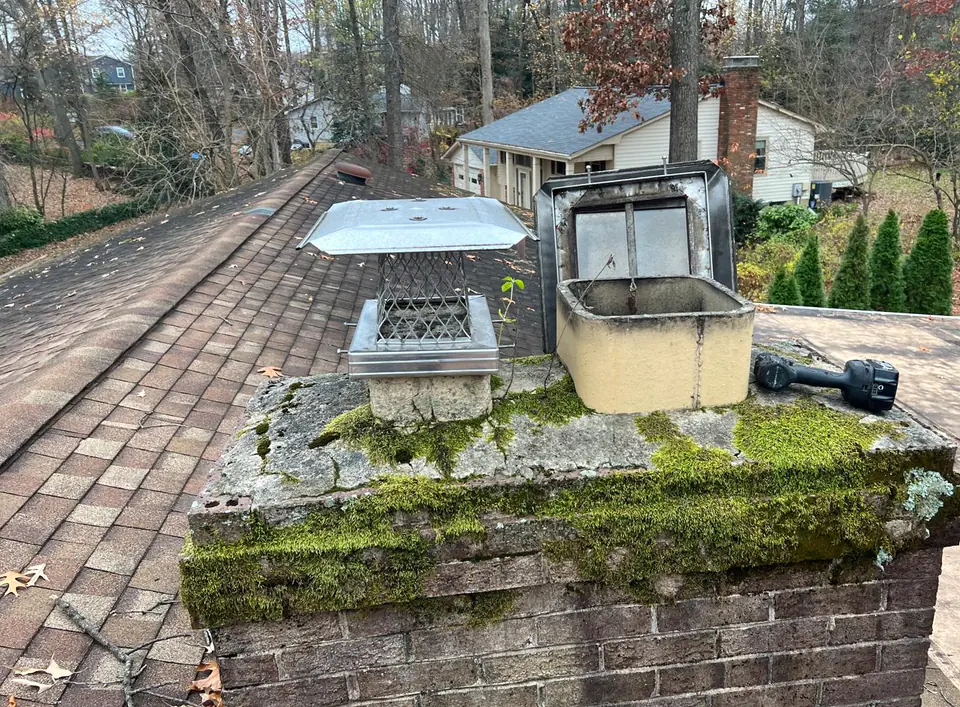
- Identify the visible chimney parts — Use binoculars or camera zoom to distinguish the chimney body, projecting flue and rain cap. Check that your notes identify each part separately; the cap’s peak is not a substitute for a termination measurement.
- Find the appliance information — Locate the fireplace or stove manual and any safely accessible identification label while the appliance is off and cool. Check that the manual matches the installed unit before using its venting diagrams.
- Mark changes on a simple sketch — Use paper and a pencil to show additions, dormers or chimney repairs. Check your sketch against existing plans or invoices, and leave dimensions blank unless they come from reliable records.
- Record operating symptoms separately — Write down whether smoke enters the room and whether that began after building work or an appliance change. Check that these observations remain separate from your conclusion about chimney height.
- Request measured findings before repairs — Ask for the roof reference points, termination measurements and any identified defects in the inspection findings. Check that a repair recommendation addresses the measured problem before authorizing an extension.
Need help now? (771) 209-4584
Does Your Fireplace Use a Masonry Chimney or a Listed Vent System?
Masonry fireplace and chimney
A brick or stone chimney needs evaluation of its termination, liner and structure together. Extending the outside masonry alone does not establish that the flue inside has been extended correctly.
Factory-built fireplace and chimney
Find the identification label and installation manual before buying components. A metal chimney extension must follow the system’s listed instructions, including component compatibility and any required support.
Direct-vent gas fireplace
Use the specific appliance’s vent-terminal instructions to evaluate its termination. Applying a masonry chimney rule to a wall terminal skips the clearances and configuration required for that vent system.
How Do Both Chimney Height Requirements Apply to One Roof?
Consider a chimney whose highest roof intersection is your starting elevation. If a relevant building portion within the horizontal measurement area rises 4 feet above that point, the chimney needs to reach at least 6 feet above the starting elevation. The higher requirement controls.
That example is arithmetic, not a measurement of your roof. Give the inspector existing roof plans when available, and ask which reference points control the result. Do not estimate compliance by counting visible brick courses or comparing the chimney with a distant roof peak.
Does Smoke Indoors Prove Your Chimney Is Too Short?
Smoke entering a room does not establish a height defect. A restricted cap, an obstructed passage, a damper problem or damaged venting components also need attention. Stop using a fireplace that sends smoke indoors and arrange an inspection before another fire.
Height measurements answer a geometry question; inspecting the flue and connected appliance answers different questions about condition and operation. Buying a taller cap before those checks risks leaving the actual defect in place.
Do not light repeated test fires to compare results after an improvised change. Keep photographs and a written record of when the smoke appeared so the inspection can address both the roof configuration and the operating problem.
Need help now? (771) 209-4584
When Does a Chimney Height Concern Need a Level 2 Inspection?
A height question alone does not automatically determine the inspection level. A different appliance, relining work, a property sale or an event likely to have damaged the chimney calls for a broader review. The [CSIA Level 2 masonry chimney inspection procedure](https://web.csia.org/external/wcpages/wcmedia/documents/CSIA_Level2_MasonryChimney%20Revision%20Final.pdf) identifies these situations and requires an interior video scan or similar inspection.
That procedure also addresses accessible chimney areas, connected appliances and findings recorded in a report. An exterior height measurement cannot reveal hidden liner cracks or replace the interior evaluation required for that inspection level.
Before approving work, distinguish the inspection from the repair proposal. The findings should identify the defect; the proposal should identify the correction. Keep both with your appliance manual so a future replacement or roof project starts with the same records.
What Should You Book Before Extending a Chimney in Washington, DC?
Book a chimney inspection before ordering an extension when the termination height is in question. Sweeping removes deposits; it does not establish whether the chimney reaches the required elevation. We offer chimney inspection service in Washington, DC.
For the appointment, keep the appliance off and cool, clear access to the fireplace, and gather your roof photographs and installation records. Ask for the inspection scope and expected visit length when booking; a roof-height check and an inspection that includes interior video scanning involve different work.
Read how much a chimney inspection costs in Washington, DC to review inspection pricing separately from repair costs. To schedule the visit at your home, contact us and identify the appointment as a chimney height inspection.
Frequently asked questions
Does every chimney have to extend above the roof ridge?
The ridge matters when it falls within the rule’s horizontal measurement area. A ridge farther away does not automatically control that particular comparison. Have the inspector identify the controlling roof or building portion rather than assuming the tallest visible peak is always the reference.
Can a taller chimney cap fix a height problem?
A rain cap covers the outlet; its overall height does not automatically extend the working flue termination. Have the actual termination and cap configuration evaluated before buying a replacement. A correction must preserve the required exhaust opening and use components appropriate for the chimney system.
Should I extend a chimney that already meets the height rule?
Meeting the height rule alone is not a reason to add an extension. If the fireplace has an operating problem, have the flue, cap, damper and appliance evaluated before changing its height. The repair should address the inspection findings rather than an assumption that taller is always better.
Can DC Chimney inspect my chimney before I replace a fireplace insert?
We offer chimney inspections in Washington, DC. Arrange the inspection before installation so the existing chimney can be evaluated alongside the replacement insert’s venting requirements. Keep the new insert’s installation manual available, because its liner and connection requirements affect the installation.
Book a Chimney Height Inspection
Call (771) 209-4584 to book an inspection before extending your chimney or replacing the connected fireplace.