
Is Smoke Coming From Your Chimney Normal?
Some smoke from a chimney is normal during a wood fire, but persistent heavy smoke or smoke entering your home means you should stop using the fireplace and arrange an inspection. We offer same-day service and are open 24/7.
Need help now? (771) 209-4584
When Is Smoke From a Chimney Normal?
A wood fire produces smoke and water vapor, which should travel through the flue—the passage inside your chimney—and discharge outdoors. Some visible exhaust during lighting does not, by itself, identify a defect. A thick plume that persists as the fire burns deserves attention rather than another load of logs.
Judge the pattern alongside what happens indoors: whether smoke spills from the fireplace, whether you smell smoke, and whether the behavior has changed. A pale plume alone cannot tell you that the chimney is clear or that combustion gases are staying outside. Likewise, an almost invisible plume does not prove that the liner is undamaged.
Which Chimney Smoke Patterns Mean You Should Stop Burning?
- Smoke crosses the fireplace opening — Smoke entering the room means the exhaust is not staying in its intended path. Stop adding fuel, keep people away from the smoke, and have the fireplace checked before using it again.
- Dense smoke continues above the chimney — Persistent heavy smoke can accompany poor combustion or restricted airflow. Record whether it happens only during lighting or throughout the burn; that distinction helps separate a startup problem from an ongoing one.
- Smoke appears through chimney masonry — Smoke escaping through mortar joints is different from exhaust leaving the top opening. Keep the fireplace out of use and arrange an inspection rather than covering the visible gap yourself.
- Smoke changes suddenly with roaring or flames above the chimney — Treat this combination as an emergency. Leave the home and contact emergency services from outside; do not climb onto the roof or approach the chimney to investigate.
Why Can Wood and Airflow Make Chimney Smoke Heavier?
Wet wood spends heat driving moisture out of the logs, which interferes with efficient burning. Restricted air supply also encourages smoky combustion and creosote deposits. Adding more wood to a struggling fire can increase the fuel load without fixing the airflow problem.
Use dry, seasoned firewood rather than trash, painted wood, or pressure-treated lumber. The EPA’s wood-burning guidance recommends seasoning firewood for at least six months. Storage time alone does not establish that a particular log is dry.
A partly closed damper restricts the exhaust passage, while household pressure problems can pull air down a chimney. These causes need different corrections: changing the wood does not remove an obstruction, and sweeping does not correct every airflow problem.
Need help now? (771) 209-4584
Eight Checks to Make After a Smoky Fireplace Is Cold
- Wait until the fireplace is completely cold — Begin only after the fire and embers are fully out and the fireplace has cooled. Check for remaining heat before approaching controls; leave hot components alone.
- Find the operating instructions — Locate the fireplace or stove manual and identify its damper and air controls. Check that the instructions apply to your appliance before moving a lever or handle.
- Check the damper with a flashlight — From outside the cold fireplace opening, use a flashlight to view the damper where accessible. Check whether the plate opens fully; a handle’s position alone does not establish that the passage is open.
- Look for visible debris — Without putting your head into the fireplace or removing parts, look for fallen material, nesting debris, or broken pieces. Finding debris means the chimney needs professional attention; seeing none does not clear the hidden flue.
- Examine the unused firewood — Look for damp storage conditions and recall whether the burning logs hissed or struggled to sustain flames. Separate questionable wood from your burning supply instead of lighting another fire to compare it.
- Note which exhaust appliances were running — Write down whether the range hood, bathroom fans, or clothes dryer operated when smoke appeared. Check whether the same combination accompanied earlier incidents; do not recreate the smoky conditions as a test.
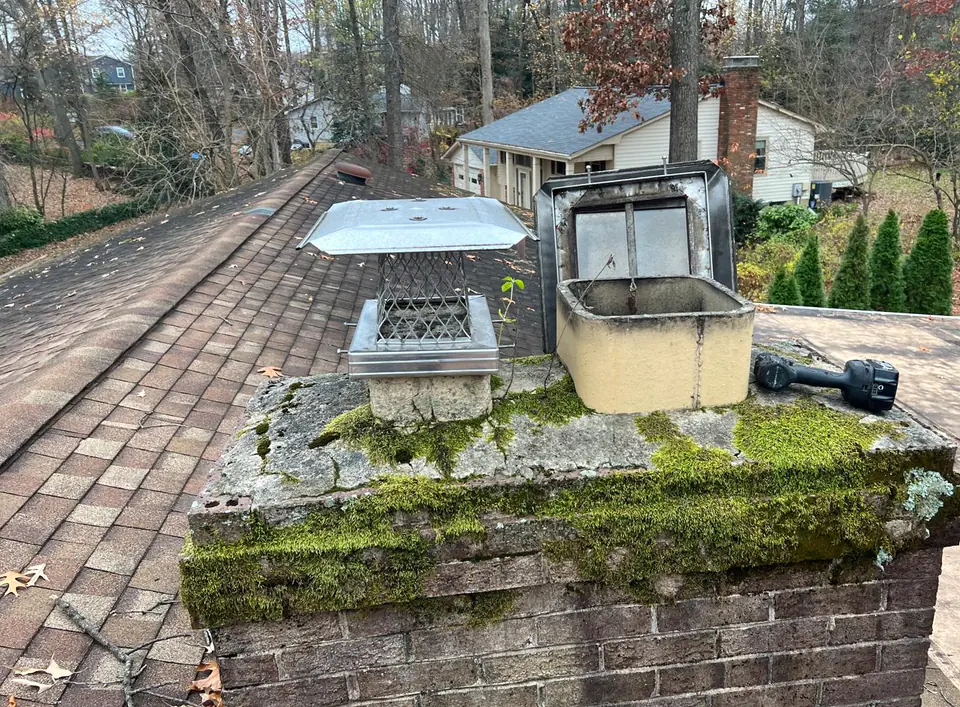
- Observe the chimney from the ground — Use your phone’s zoom to photograph visible damage or an obviously obstructed cap without climbing. Check that the image shows the location clearly; leave cap removal and roof access to a professional.
- Save the pattern for the inspection — Record the fuel, weather, smoke location, and whether the problem began during lighting or later. Check that your notes distinguish observations from guesses, and keep the fireplace unused until the cause is assessed.
Which Attempts to Clear Chimney Smoke Can Make Things Worse?
Do not build a larger fire to force smoke through a restricted chimney. More heat and fuel do not establish that the flue is clear, and combustible deposits can remain inside. A stopped or smoky fire needs assessment before another burn.
Do not treat a chemical cleaning log as proof that the chimney is ready for use. The Chimney Safety Institute of America’s homeowner guidance explains that these products do not replace mechanical sweeping and inspection.
Avoid removing baffles, loosening stovepipe, or changing a cap to experiment with airflow. Those parts form part of the venting system, and changing them can create another problem while leaving the original cause unresolved.
Does Chimney Smoke Call for Inspection, Cleaning, or Repair?
Inspection: find the reason for changed smoke
Choose an inspection when smoking is new, recurring, or unexplained. The assessment considers the exhaust path and component condition; cleaning alone does not establish why smoke started behaving differently.
Cleaning: remove deposits from the exhaust passage
Sweeping addresses soot and creosote in the flue and smoke chamber. It is the appropriate response to deposits, but it does not rebuild damaged masonry or repair a broken damper.
Repair: correct an identified defect
A damaged damper, liner, or other chimney component needs work matched to that defect. Base the repair on inspection findings rather than choosing a replacement part from the plume’s color.
Need help now? (771) 209-4584
Why Does Chimney Smoke Change With Wind or Roof Conditions?
Smoke that repeatedly changes direction with gusts gives the inspector a different clue from smoke that remains heavy in calm conditions. Record the weather and the fireplace’s behavior indoors. An outdoor plume bending in the wind does not, by itself, identify a blockage.
Chimney termination height and nearby roof surfaces belong in a professional draft assessment. Our guide to the 2-10 rule for chimney height explains the height question separately. Do not add a chimney extension or change the cap based only on a ground-level observation.
What Should You Book for Recurring Chimney Smoke in Washington, DC?
Book our chimney inspection service when smoke behavior changes or the fireplace spills smoke indoors. We provide chimney inspection, chimney video inspection, sweeping, and repair services. Inspection evaluates condition; cleaning and repair address the findings rather than serving as interchangeable appointments.
The inspection scope determines which accessible components are examined and whether an interior video assessment is needed. Request the appointment length and included work when booking, since a visual assessment, video inspection, and deposit removal involve different tasks.
We come to homes throughout Washington, DC. Use the contact form or call (771) 209-4584 to request an inspection appointment, and leave the fireplace cold for the visit.
Frequently asked questions
Does white chimney exhaust mean my firewood is wet?
White-looking exhaust can contain water vapor, so color alone does not establish that your wood is wet. Check the wood’s storage and drying history alongside signs such as hissing or difficulty sustaining flames. Persistent heavy exhaust still needs attention even when it looks pale.
Can I keep using the fireplace if chimney smoke stays outdoors?
Persistent heavy smoke deserves an inspection even when you do not see smoke indoors. Outdoor discharge does not prove that the liner is sound or that the flue is free of deposits. Stop using the fireplace when its smoke pattern changes significantly.
Why does smoke come from an unused fireplace when another fireplace is burning?
The operating fireplace can exhaust enough household air to draw replacement air down the unused chimney. That downward airflow can bring smoke into the home. Stop using the fireplace and have the air supply and venting arrangement assessed rather than sealing openings yourself.
Does a chimney need cleaning every time visible smoke appears?
Visible smoke alone does not establish that deposits are the cause. Sweeping addresses buildup, while damper problems, fuel conditions, and venting defects need their own corrections. An inspection helps determine which work addresses the actual problem.
Have Recurring Chimney Smoke Checked
Request an inspection with DC Chimney before using a fireplace that repeatedly spills smoke or produces persistent heavy exhaust.