
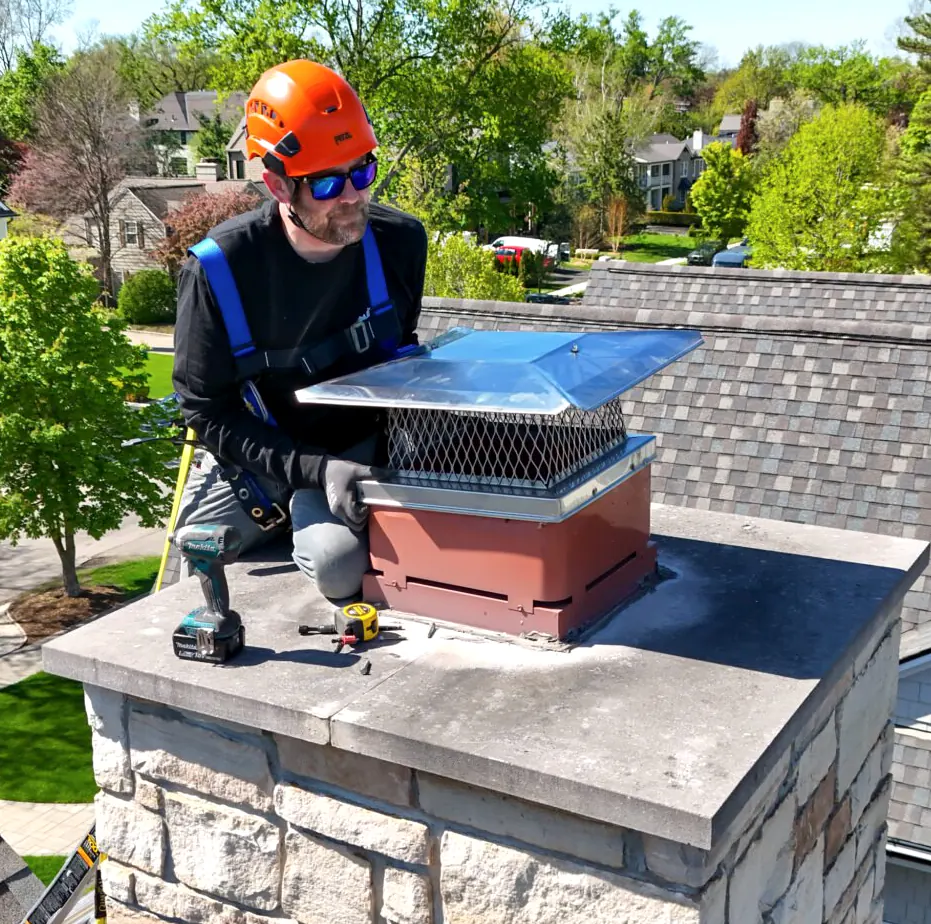
Chimney Structure Concerns
Leaning Chimney in Washington, DC
A leaning chimney inspection in Washington, DC starts at $39. We inspect chimney problems and provide chimney rebuild service to address damaged masonry. Same-day service is available, and we are open 24 hours a day, 7 days a week.
- Owner Gregory Mitchell Has 22 Years of Experience
- Warranty Starting From 2 Years
- Hablamos Español
Get a fast quote
A Leaning Chimney Needs Its Structure Checked
A leaning chimney tilts away from its original position instead of standing upright. Separation from the house, widening masonry cracks, or a shifting chimney stack can signal movement that needs attention. The visible lean alone does not establish whether damage affects the upper stack, the masonry below it, or its supporting base. We provide chimney inspections and chimney rebuild service for damaged chimney structures.
A cleaning chimney log cannot straighten a chimney or restore its support. Cleaning addresses deposits inside the venting passage; structural repair addresses the masonry and support that hold the chimney upright. Stop using the connected fireplace or appliance when you notice a lean, because movement can also damage the passage carrying smoke and combustion gases outside.
Why Chimney Masonry Starts Leaning
Movement Beneath the Chimney
Settlement or movement beneath a chimney can shift its supporting base and tilt the masonry above it. Rebuilding only the visible top leaves the underlying support problem unresolved when that movement starts below.
Water Damage Through the Masonry
Water entering cracks and damaged joints can contribute to deterioration, including damage when trapped moisture freezes and expands. Logs for cleaning a chimney cannot seal these openings or restore weakened masonry.
Deteriorated Mortar Joints
Mortar holds masonry units together, and deep deterioration reduces the integrity of those connections. Fire logs for cleaning chimneys do not replace missing mortar; visible movement requires assessment before choosing tuckpointing, partial rebuilding, or more extensive work.
Damage Confined to the Upper Stack
A damaged upper section can lean even when the chimney below remains upright. The location and extent of movement matter because a localized rebuild and work involving the supporting base address different problems.
Need help now? (771) 209-4584
Leaning Chimney Warning Signs Visible From the Ground
A Widening Gap Beside the House
Separation between the chimney and nearby siding, trim, or roof edges can indicate movement. A gap that has changed deserves attention even when the chimney’s tilt looks slight from the yard.
Cracks That Cross Multiple Joints
Stair-step cracks, displaced bricks, or openings that continue across several masonry joints can accompany structural movement. Crack width alone does not reveal the full condition of the chimney or its support.
Loose Bricks or Fallen Masonry
Bricks, mortar pieces, or other chimney debris on the ground indicate material has detached. Keep people and pets away from the area below rather than approaching the stack to investigate the source.
A Stack That Looks Out of Alignment
A visible bend or offset between the lower chimney and upper stack can identify where movement becomes apparent. An existing photograph taken from the same position helps show whether that alignment has changed.
Safe Checks Around a Leaning Chimney
- Stop Using the Connected Fireplace — Leave the fireplace or connected appliance unused while the leaning structure is assessed, including avoiding logs that clean chimney deposits. Do not light a test fire to check the draft; a fire does not establish whether displaced masonry or the flue is sound.
- Keep Clear of the Stack — From a safe location, note whether loose masonry lies below the chimney or whether the stack has separated from the house. Keep others away from that area, and leave roof access, ladders, pushing, and attempts to brace the chimney out of your checks.
- Record What You Can See Safely — Take photographs only from a location clear of potential falling debris, and note when you first noticed the change. Include whether the whole stack appears tilted or just its upper section, then request service with your address and those observations.
Need help now? (771) 209-4584
Frequently asked questions
What does it cost to start checking a leaning chimney in Washington, DC?
A chimney inspection starts at $39. The inspection is the starting point for assessing the visible lean and determining the repair scope. Rebuild work depends on the affected masonry and supporting structure, so the inspection starting price is separate from rebuilding.
How long does leaning chimney work take, and how often should I clean my chimney afterward?
The time needed depends on whether the work involves inspection, rebuilding an upper section, or addressing damage farther down the structure. Access, the amount of masonry involved, and required mortar curing also affect the work schedule. Cleaning frequency depends on fireplace use, fuel, and the deposits found during inspection. Cleaning does not replace a structural assessment when a chimney visibly leans.
Can you inspect a leaning chimney or clean a chimney near me at night or on weekends?
We are open 24 hours a day, 7 days a week, and serve all of Washington, DC from our Connecticut Avenue NW base. A leaning chimney needs structural attention even when cleaning is also due. Keep the connected fireplace unused and stay clear of loose masonry while arranging service.
What should I tell you when calling about a leaning chimney in Washington, DC?
Give us your service address, when you first noticed the lean, and whether cracks, falling masonry, or separation from the house are visible. Mention any smoke entering the room or recent change in fireplace operation, because chimney movement can affect the venting passage. Photographs taken safely from the ground provide useful context without requiring you to climb or approach unstable masonry.
Arrange a Leaning Chimney Inspection
Call DC Chimney at (771) 209-4584 with your Washington, DC address and the visible changes you have noticed.