
How Much Does Chimney Crown Repair Cost?
For crown repair cost in Washington, DC, chimney inspections start at $39, with crown repairs priced separately for the work required. Same-day service is available, and we are open 24 hours a day, 7 days a week.
Our Starting Prices in Washington
| Service | Price |
|---|---|
| Chimney Sweep | from $89 |
| Chimney Inspection | from $39 |
| Chimney Cleaning | from $89 |
| Chimney Cap Installation | from $250 |
| Chimney Liner Installation | from $899 |
| Gas Fireplace Service | from $49 |
Need help now? (771) 209-4584
What Changes Chimney Crown Repair Cost?
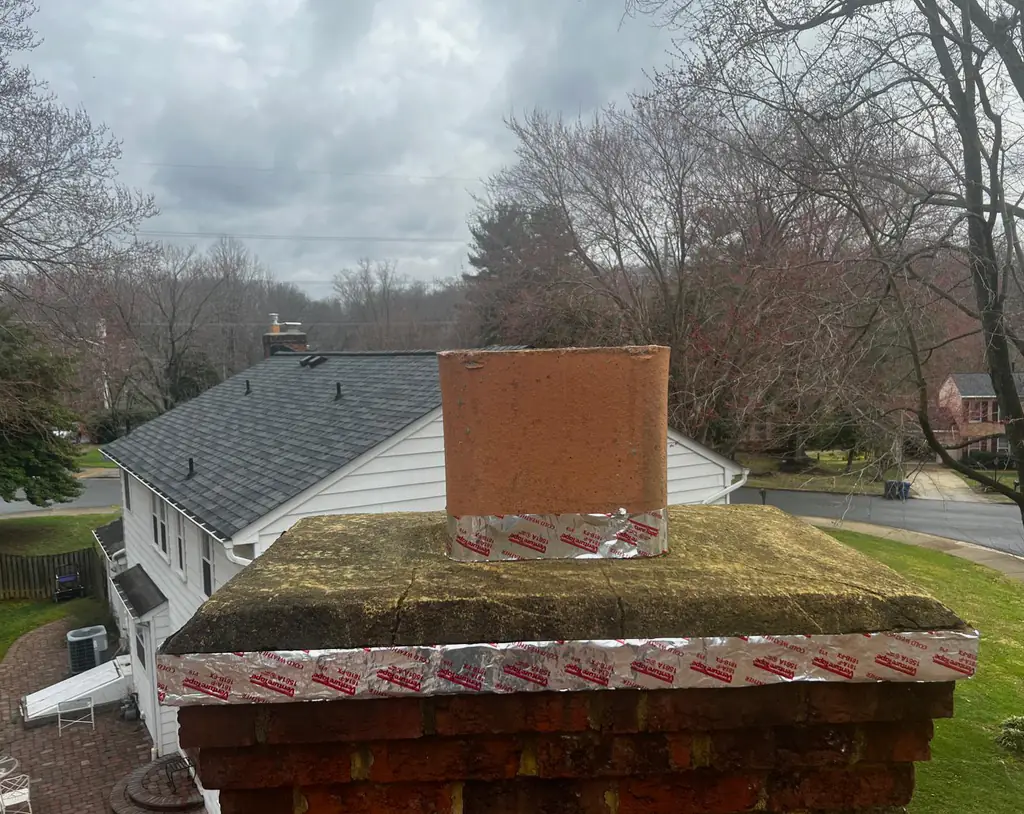
The crown is the sloped surface across the top of a masonry chimney, surrounding the flue openings. It sheds water away from the brickwork. A repair estimate needs to account for the condition of that surface, its edges, and the joints around the flues.
Repairing a limited surface crack involves a different scope from removing loose material or replacing a deteriorated crown. Crown size, roof access, and damage extending into the masonry also change the work involved. Ask for those conditions to appear in the written estimate so you can compare proposals for the same repair.
Our chimney crown repair service addresses the crown itself. Keep work on the cap, flashing, brickwork, and liner separately identified; paying for one component does not repair damage in another.
Which Crown Problems Belong in the Repair Estimate?
- Cracks across the top — Photograph visible cracks from the ground with a zoom camera or binoculars. A photograph shows their location, but a close inspection establishes whether the surrounding material remains sound.
- Loose or missing crown material — Crumbling edges and missing chunks call for an assessment of the remaining crown. A surface coating does not restore material that has broken away.
- Gaps around a flue tile — The joint where a clay flue tile passes through the crown needs separate attention. Ask whether the estimate includes that joint and how the repair accommodates movement between the parts.
- Damaged brickwork below the crown — Flaking brick faces and deteriorated mortar beneath the crown need their own assessment. Rebuilding the crown alone leaves that masonry damage in place.
- Water inside the fireplace — Record where the water appears and whether it follows rain. The crown is one possible entry point; the cap, flashing, and masonry also need consideration before assigning the leak to one part.
Does Your Chimney Crown Need Sealing, Repair, or Replacement?
Localized crack repair
This fits limited damage when the surrounding crown remains sound. The scope should identify the cracks, the preparation needed, and the repair material; filling visible lines alone does not address loose material beneath them.
Protective crown coating
A coating belongs on a suitable, properly prepared surface. It does not replace missing concrete, correct a badly shaped crown, or stabilize a crown that is breaking apart.
Crown replacement
Replacement addresses a crown with extensive deterioration or a shape that fails to shed water. Compare removal, new crown construction, the projecting edge, and treatment around the flue openings in the proposed scope.
Repair of an adjoining component
A sound crown does not need replacement simply because the chimney leaks. Damage at roof flashing or the flue opening requires work on that component, so the estimate should connect each repair to a documented finding.
Need help now? (771) 209-4584
How Can You Prepare for a Crown Repair Estimate Safely?
- Start with a cold fireplace — Leave the fireplace off and let any embers cool completely before looking inside. Check for remaining heat without handling or disturbing ashes.
- Photograph the whole chimney — Use your phone from a stable position on the ground. Check that the picture includes the chimney top, brickwork, and roof connection so the location of visible damage is clear.
- Zoom in on the crown — Use binoculars or your camera zoom to look for cracks, missing edges, and loose pieces. Check whether the top is actually visible; leave unseen areas for professional inspection instead of using a ladder.
- Identify the cap separately — Look for the cover above the flue opening and distinguish it from the crown beneath it. Label your photographs so a missing cap does not get mistaken for missing crown material.
- Record interior evidence — Use a flashlight to photograph visible damp patches or staining around the fireplace opening. Check the date and location of each photo so later changes are easy to compare.
- Keep a simple rain record — Write down when water appears and which surfaces become wet. Check whether the pattern repeats after rain; this gives the inspection useful evidence without attempting roof testing yourself.
- Compare the written repair scope — Ask for photographs of the crown and an itemized description of preparation, repair, and adjoining work. Check that each proposed task corresponds to an observed defect.
- Request completion photographs and instructions — Ask for pictures showing the repaired crown, its edges, and the joints around the flues. Check the material-specific curing instructions and the stated return-to-use conditions before lighting another fire.
Which Starting Prices Apply When Crown Damage Is Found?
Visible crown cracking that needs assessment: our chimney inspection starting price is $39. The inspection and the crown repair are separate services. Use the findings to establish whether the repair concerns isolated cracks, deteriorated edges, or the entire crown.
Crown damage alongside a missing or damaged cap: our chimney cap installation starting price is $250. Crown work needs a separate scope and price because the cap covers the flue opening while the crown protects the masonry top. Replacing the cap does not close cracks in the crown.
When comparing our prices with a repair proposal, keep inspection, crown work, and cap installation distinct. Ask which services the total includes before approving the work; a starting price for one service is not a combined price for all three.
Why Does a Chimney Crown Repair Sometimes Fail?
Covering loose material leaves the repair attached to a weak base. The scope should address removal of deteriorated material and surface preparation before new material is applied. Ask for photographs that show the condition beneath the visible cracks.
Water also needs a route off the crown and away from the chimney walls. Filling cracks without addressing a defective slope or damaged projecting edge leaves the drainage problem unresolved. Check that the proposal addresses the crown’s shape as well as its surface.
Another failure starts with repairing the wrong component. A cap, crown, and roof flashing handle different parts of water protection. Our guide to chimney crown vs. cap: what is the difference? helps you identify the parts named in an estimate.
Need help now? (771) 209-4584
Does a Crown Inspection Include the Repair Visit?
An inspection establishes the condition of the chimney; crown repair changes or replaces damaged material. Before booking, check whether the appointment covers assessment, repair, or both. The written scope should identify roof access, removal of damaged material, application work, and cleanup where those tasks apply.
Separate time spent at your home from the repair material’s curing period. Request a visit duration for the agreed scope and written instructions for rain exposure and fireplace use afterward. A finished-looking surface does not establish that the material has completed its required cure.
At booking, provide your home address and identify the appointment as a chimney crown assessment. Keep your ground-level photographs and rain notes ready for the visit; leave ladders, roof access, and hands-on crown checks to the chimney professional.
When Should a Crown Problem Lead to a Chimney Inspection?
Arrange an inspection when you see loose crown material, missing pieces, recurring water entry, or damage extending into the brickwork. Keep people away from areas beneath falling debris. Stop using the fireplace when damage or water affects the firebox or flue, and have its condition checked before reuse.
The CSIA homeowner resources summarize the NFPA 211 recommendation for annual chimney inspection. An annual check gives crown deterioration a place in routine maintenance instead of leaving it unnoticed until an indoor stain appears.
After repair, keep the estimate, completion photographs, and care instructions together. Compare the same visible areas after later rain, and report recurring dampness with dated photographs. That record helps distinguish an unresolved water-entry point from a new defect.
Frequently asked questions
Can I seal a cracked chimney crown myself?
Keep your checks at ground level and leave roof access and crown preparation to a chimney professional. Sealing suits a sound surface with appropriate preparation; it does not restore loose or missing material. Ask whether the crown needs crack repair, a coating, or replacement before buying a sealant.
Will a new chimney cap fix a cracked crown?
A new cap covers the flue opening, while the crown sheds water from the masonry top. Installing a cap leaves crown cracks untouched. When both parts are damaged, request a scope that identifies the work on each.
Does crown damage mean my chimney liner needs replacement?
Crown damage alone does not establish the condition of the liner inside the chimney. The liner needs its own assessment before repair or replacement is selected. Keep crown findings and liner findings separate in the inspection report so the proposed work has a clear reason.
What should I check before approving a crown repair estimate?
Check that the estimate identifies the damaged areas, surface preparation, repair materials, and treatment around the flues. Look for separately described work on caps, flashing, or masonry. Request completion photographs and curing instructions so you know how the repair will be documented and when the fireplace can return to use.
Book a Chimney Crown Assessment
Call (771) 209-4584 to book a chimney inspection for crown damage at your Washington, DC home.