
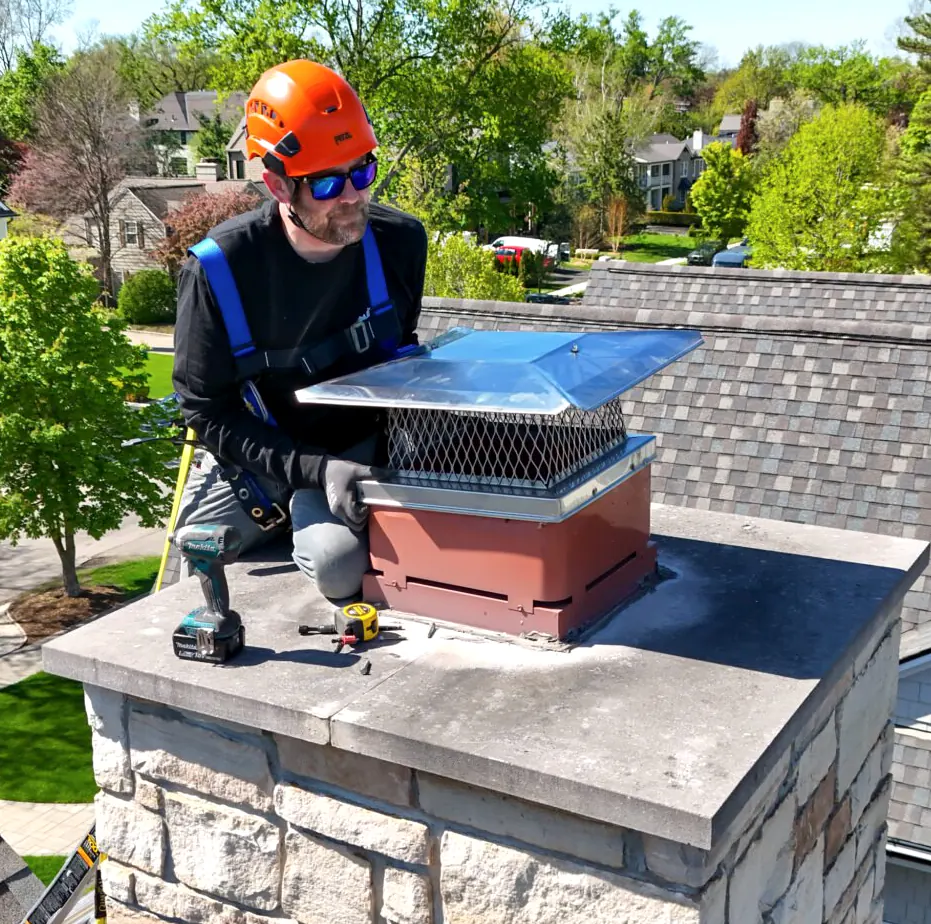
Rainwater and Chimney Leaks
Chimney Leaking When It Rains in Washington, DC
For a chimney leaking when it rains in Washington, DC, our chimney inspections start at $39. We inspect for water entry around your chimney and fireplace. Same-day service is available, and we are open 24 hours a day, 7 days a week.
- Owner Gregory Mitchell has 22 years of experience
- Warranty starting from 2 years on chimney work
- Hablamos español
Get a fast quote
Chimney Leaking During Rain: Where Water Gets In
Rainwater reaches a fireplace through several routes: an exposed flue opening, cracks in the crown, deteriorated masonry joints, or gaps at the roof flashing. The wet patch you see inside does not always sit directly below the opening outside, because water travels along surfaces before it appears. Our chimney leak repair starts with inspecting the chimney and the affected area so the repair addresses the entry point.
Fixing chimney leaks means separating the source of the water from the damage it leaves behind. A missing cap leaves the flue opening exposed, while failed flashing lets rain enter where the chimney meets the roof. Painting over an interior stain does not close either opening, and applying waterproofing over damaged mortar does not rebuild the joints. Keep the fireplace unused when water is entering the firebox, and leave roof access to the person inspecting it.
Does a Rain-Leaking Chimney Need Repair or Replacement?
A rain leak alone does not establish that your entire chimney needs replacement. The decision depends on which component has failed and whether the surrounding material remains sound: an isolated mortar joint calls for a different repair than loose bricks across a damaged section. We offer chimney flashing repair, crown repair, tuckpointing, cap installation, and chimney rebuilds. To fix a chimney leak, the repair must restore the failed water barrier; replacement becomes relevant when a component is missing, extensively deteriorated, or unable to support a lasting repair.
Need help now? (771) 209-4584
What Changes the Estimate for Rain-Related Chimney Repairs?
- The Component Letting Rain In — Flashing, crowns, caps, and masonry perform different jobs, so repairs for a leaking chimney begin with locating the failed component. A cap covers the flue opening; flashing seals the roof connection. Repairing one does not correct damage in the other.
- The Extent of Masonry Deterioration — Open mortar joints, damaged brick faces, and loose masonry require different amounts of work. Tuckpointing replaces deteriorated mortar, while rebuilding addresses damaged chimney sections. The condition of the material around the visible leak determines how far the repair needs to extend.
- Access to the Damaged Area — The chimney’s position, roof slope, and location of the damaged component affect access and setup. When you book, mention any locked roof access or restrictions on reaching the property so those conditions are accounted for before the visit.
- Damage Beyond the Entry Point — Water stains show where moisture has surfaced, but the inspection also needs to consider affected chimney components. Leaky chimneys sometimes require work at more than one opening. The estimate should identify each repair rather than treating every damp area as a separate diagnosis.
Signs Rainwater Is Entering Your Chimney
Chimney Leaking Water Into the Firebox
Drips, puddles, or wet ashes after rain point to water reaching the fireplace interior. Keep the fireplace unused and photograph the water from floor level before it dries.
Stains Beside the Chimney
A ceiling or wall stain near the chimney marks moisture reaching an interior surface. Note whether it grows during rain; its location alone does not establish whether the entry point is the chimney or adjoining roof.
White Deposits or Deteriorating Mortar
White deposits on masonry indicate moisture moving dissolved salts to the surface. Crumbling joints or flaking brick faces add evidence of deterioration, but neither identifies the water’s entry point by itself.
Rust Around Fireplace Components
Rust on a damper or other metal fireplace components indicates moisture exposure. Photograph visible corrosion without dismantling parts, and note whether it appears alongside fresh drips after rain.
Need help now? (771) 209-4584
Frequently asked questions
Can you repair my rain-leaking chimney in Washington, DC without rebuilding it?
We offer targeted repairs for flashing, crowns, mortar joints, and other chimney components, as well as rebuilds. An inspection determines whether the damage is confined to a repairable area or extends through a larger section. A missing cap or isolated flashing defect does not, by itself, establish a need to rebuild the chimney.
What does it cost to start checking a chimney rain leak?
A chimney inspection starts at $39. The repair scope depends on the entry point, access, and condition of the affected components. Inspection and repair are separate services, so compare the work listed in the repair estimate with the defect identified during the inspection.
What information should I have when booking a chimney leak inspection in Washington, DC?
Have your service address, callback number, and property access details ready when you request service. Photos of visible stains, drips, or wet fireplace surfaces help document conditions that may dry before the visit. Take those photos from a safe indoor position; you do not need to climb onto the roof or remove chimney components.
How long does a visit for a chimney that leaks during rain take?
The visit length depends on access and how much of the chimney needs inspection to trace the water entry. An exposed defect takes a different amount of investigation than water appearing away from its source. Repair time also depends on the damaged component and whether the work involves flashing, masonry, or replacement parts; inspection establishes that scope.
Trace the Rain Entry Before Repairing the Stain
Call DC Chimney at (771) 209-4584 to book a chimney inspection at your Washington, DC home. Have your property access details and photos of visible water damage ready.