
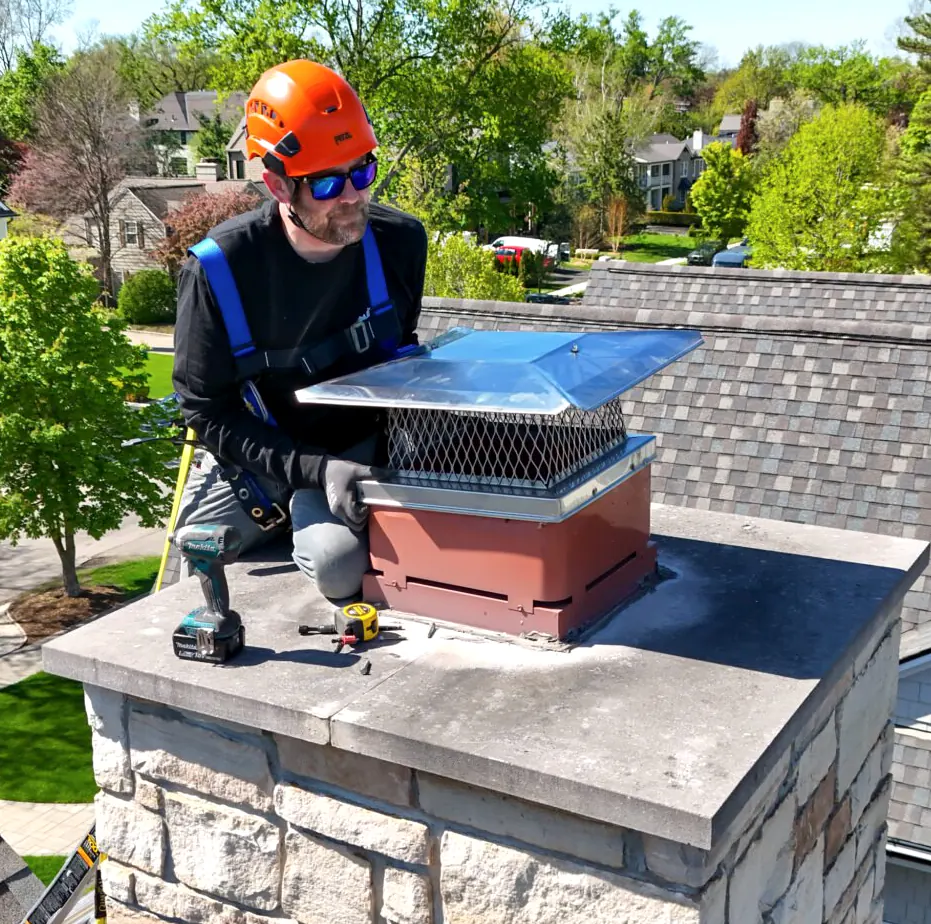
Find the Odor Source
Chimney Smell in the House in Washington, DC
For chimney smell in Washington, DC, our chimney inspection starts at $39. We inspect for odor sources and provide creosote removal. Same-day service is available, and we’re open 24 hours a day, 7 days a week.
- Owner Gregory Mitchell has 22 years of experience
- Warranty starting from 2 years on chimney work
- Spanish-speaking service
Get a fast quote
What Does Creosote Smell Like Inside Your Home?
Creosote smell is commonly sharp, smoky or tar-like, including when no fire is burning. Creosote forms as wood-burning exhaust cools and leaves deposits inside the chimney. Warm, humid conditions make these odors more noticeable, while airflow down the flue carries them into your rooms.
Fireplace odors also come from soot, damp debris, animal nesting material or moisture entering the chimney. A lingering fireplace smell therefore calls for an inspection before choosing a treatment. We provide creosote removal for chimney deposits, while inspection helps distinguish buildup from water entry or an airflow problem. Odor strength alone does not measure the amount of material inside the flue.
Three Safe Checks for Chimney Smell Before Another Fire
- Let the fireplace cool and observe from the room — Keep the fireplace off while investigating an unexplained odor. Once everything is cold, look from floor level for visible soot, debris or staining around the firebox. Leave deposits and unfamiliar material undisturbed; do not light a fire to burn away the smell.
- Note moisture and recent rain — Look for damp patches, water marks or debris visible around the fireplace opening without reaching into the chimney. Record whether the odor follows rain or humid weather. This pattern helps distinguish moisture-related odor from a complaint that occurs mainly during burning; checking the roof or chimney top belongs to the service visit.
- Record when air and odor enter the room — Note whether the smell appears while a kitchen exhaust fan, bathroom fan or clothes dryer is running. These appliances remove indoor air and can contribute to air being drawn down a chimney. Report the pattern without running equipment to recreate it, and leave damper adjustments or dismantling to the inspection.
Need help now? (771) 209-4584
How We Address Chimney Deposits, Moisture and Odor
- Inspect before selecting the treatment — We use chimney inspection to assess visible deposits and chimney condition. A smell from the chimney does not establish one cause by itself, so the inspection guides whether the work involves cleaning, creosote removal or a component repair.
- Address accumulated creosote — We provide creosote removal for deposits left by wood-burning exhaust. Hard, tar-like material requires a different assessment from loose soot; our page on heavy creosote buildup covers that deposit problem. Removing accumulated material addresses the residue that supplies the odor.
- Clean the fireplace and chimney — We offer fireplace cleaning and chimney cleaning to address accumulated combustion residue. Cleaning the firebox alone leaves material farther up the chimney untouched, which matters when the odor continues after the visible fireplace area has been cleaned.
- Address paths for water entry — We provide chimney leak repair, flashing repair, crown repair and cap installation. These services address different parts of the chimney, so the location of damage matters. Removing damp residue without correcting water entry leaves the moisture source in place.
- Assess smoke and damper problems — We offer smoky fireplace repair and chimney damper repair when the complaint involves smoke entering the room or a damaged damper. When a fireplace smells mainly during use, report that timing: an operating problem needs attention alongside any deposit removal.
Does Chimney Odor Require Cleaning, Repair or Replacement?
Odor alone is not a reason to replace a chimney liner, cap or damper. Deposits call for cleaning or creosote removal; damaged components call for an assessment of their condition and function. A repair addresses a damaged area, while replacement addresses a component that can no longer perform its job. We offer chimney liner repair and installation, damper repair and cap installation, so the decision follows the condition found during inspection.
Need help now? (771) 209-4584
Frequently asked questions
How long does a visit for chimney odor take?
The visit length depends on chimney access, the extent of deposits and whether the work includes removal or repair. Inspection comes first because a smoky odor, damp debris and a damaged component involve different work. Tell us whether the fireplace has been used recently and whether access to it is restricted; those details help us prepare for the inspection.
What does it cost to start checking chimney smell in Washington, DC?
A chimney inspection starts at $39. The inspection is the starting service for assessing deposits and chimney condition; creosote removal and repairs address the findings. Cleaning targets accumulated residue, while leak or component repair addresses a physical source of the problem, so the odor itself does not determine the work required.
Can I contact DC Chimney about chimney odor at night or on a weekend?
Yes. We’re open 24 hours a day, 7 days a week, including nights and weekends. Keep the fireplace off when an unexplained odor occurs, and tell us whether smoke is entering the room or the smell occurs with a cold fireplace. That distinction separates a problem during operation from an odor present between fires.
What details should I give you when I call about a chimney odor?
Give us your Washington, DC service address, whether the fireplace burns wood or gas, and when the odor appears. Mention recent rain, visible moisture, debris or smoke entering the room, without climbing or dismantling anything to gather details. Call (771) 209-4584 or request service with those observations so we can prepare for the visit.
Book a Chimney Odor Inspection
Call (771) 209-4584 to book an inspection for persistent smoky, tar-like or damp chimney odors.