
What Is a Chimney Cap?
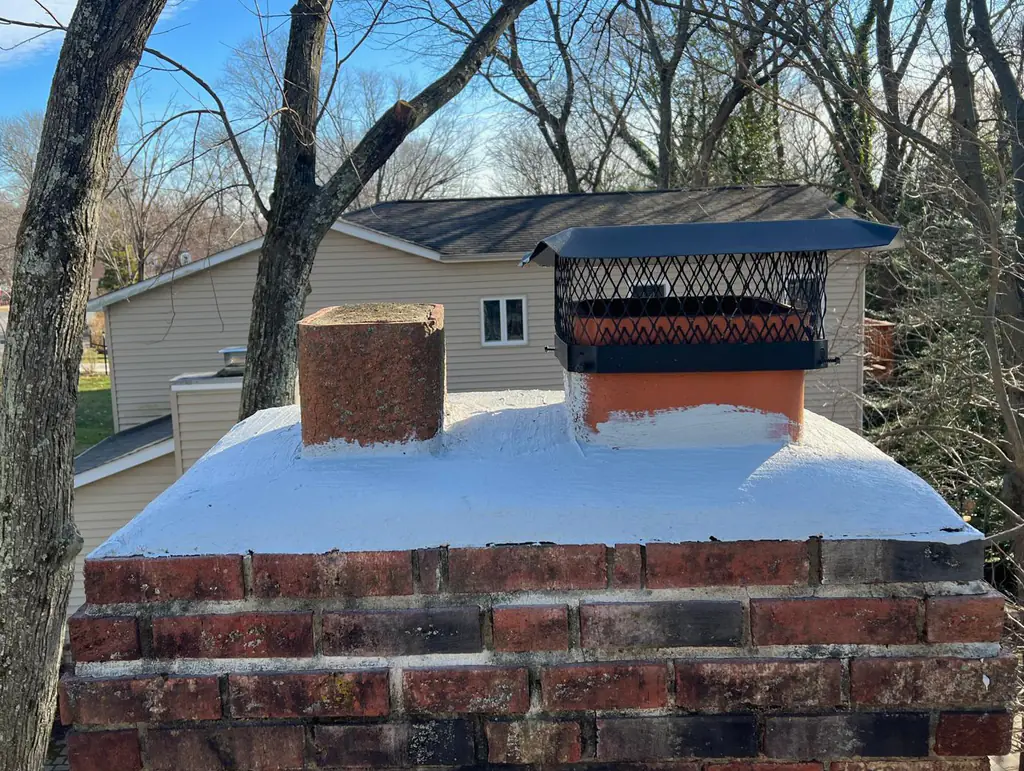
A chimney cap is a protective cover over the chimney opening that helps keep rain, animals and debris out while letting exhaust escape. You can inspect its visible condition from the ground; leave roof access, measurements and installation to a chimney professional.
Need help now? (771) 209-4584
What Is a Chimney Cap Designed to Keep Out?
A chimney cap sits above the flue, the passage that carries combustion gases outside. Its raised lid sheds rain away from the opening, while screened sides on many designs discourage birds, other animals and windblown debris from entering.
The space beneath the lid lets exhaust leave the chimney. Covering that opening with a board, tarp or improvised metal sheet blocks the escape route rather than protecting it.
A cap protects the flue opening; the chimney crown is the sloped surface around the flue on a masonry chimney. A chase cover spans the top of an enclosed chimney chase. Identifying the damaged part matters because replacing a cap does not repair cracks or failed joints elsewhere.
Which Parts of a Chimney Cap Need to Stay Clear?
- Rain lid — The lid directs rainfall away from the flue opening. A bent or displaced lid needs attention because its position affects both coverage and the space available for exhaust.
- Screen or mesh — Screened sides provide a barrier against animals and debris while preserving airflow. Soot, leaves or nesting material packed against the screen reduce the open area.
- Mounting base and fasteners — The base connects the cap to its intended mounting surface. Missing fasteners, separated seams or a tilted base are reasons to arrange an inspection rather than try tightening parts from a ladder.
- Space above the flue — The cap must leave the exhaust opening clear according to its installation instructions. A wider lid alone does not establish that the cap has enough height or the correct attachment.
Which Chimney Cap Fits Your Flue Arrangement?
Single-flue cap
This design covers one flue opening. A cap that attaches to a projecting clay flue tile needs the correct dimensions and a sound attachment surface; matching the chimney’s overall width is insufficient.
Multi-flue cap
A larger cap can cover several flue openings on one masonry chimney. Its dimensions and lid height must accommodate every flue beneath it without obstructing any outlet.
Factory-built chimney termination
A factory-built metal chimney uses a termination specified for that system. Match the replacement to the manufacturer’s instructions rather than choosing a masonry cap because it looks similar.
Liner termination cap
A metal chimney liner needs a cap and connection suited to that liner system. Check the existing liner documentation before ordering a replacement based only on its visible shape.
Need help now? (771) 209-4584
How Should You Compare Chimney Cap Materials?
Common cap materials include stainless steel, galvanized steel and copper. Stainless steel resists corrosion, galvanized steel depends on its protective coating, and copper develops a patina that changes its appearance over time.
Material alone does not establish compatibility. Compare the cap’s intended fuel applications, mounting method and maintenance access before choosing its finish. For a manufactured chimney or liner, the system’s instructions take priority over appearance.
Which Chimney Cap Problems Need Professional Attention?
- A missing or leaning cap — An exposed opening loses the cap’s weather and animal barrier. Keep people away from the area below loose metal and arrange professional inspection of the cap and attachment surface.
- Torn mesh or open seams — A gap defeats the screen’s barrier even when the lid remains in place. Have the cap assessed for repair or replacement instead of wrapping extra mesh around the outlet.
- Packed screens or visible nesting material — Blocked openings restrict the exhaust path. Stop using the connected fireplace or appliance until a professional checks the obstruction; do not burn material out or reach into the chimney.
- Animal sounds — Scratching or movement calls for an animal assessment before closing the opening. Installing a cap over occupied nesting space traps animals inside; removal also needs to account for applicable wildlife protections.
- New smoke entry or water stains — Smoke entering the room requires stopping fireplace use and having the venting checked. Water stains require tracing the entry point because a cap, crown, flashing or another component can be involved.
How Can You Check a Chimney Cap Without Climbing?
- Start with a cold fireplace — Wait until the fireplace is completely cold before making any indoor observations. Confirm that no fire or hot embers remain before approaching the firebox.
- Find the appliance paperwork — Gather the fireplace, stove, chimney or liner manual and any previous installation record. Check whether it identifies the chimney system or replacement termination.
- Choose a clear ground-level viewpoint — Use binoculars from firm ground where the chimney top is visible. Confirm that you can observe it without stepping onto a ladder, roof, fence or unstable surface.
- Photograph the lid and base — Take zoomed phone photos from more than one safe position. Review the images for a tilted lid, displaced base or a missing section; distant photos cannot establish that fasteners are secure.
- Look at the screened openings — Use the photos or binoculars to look for packed debris, torn mesh or nesting material. Record anything visible without poking tools into the cap or attempting removal.
- Note how many outlets you can see — Record whether the chimney appears to have one flue or several. Mark obscured areas in your notes rather than treating a partial view as a complete count.
- Check the cold firebox for evidence — Use a flashlight from the fireplace opening to look for fallen debris, water marks or pieces of metal. Keep your head and hands out of the flue, and photograph what you can see.
- Arrange the appropriate inspection — Save your photos and equipment records for the appointment. For a missing, damaged or unsuitable cap, book our chimney cap installation service; suspected blockage or smoke entry also needs a venting assessment before reuse.
Need help now? (771) 209-4584
What Should a Chimney Cap Installation Include?
A cap installation should begin with identifying the chimney or liner system, measuring the required mounting dimensions and checking the attachment surface. Cracked flue tile or deteriorated masonry needs assessment before a replacement is fastened to it.
The installer should follow the cap and chimney instructions for attachment, outlet clearance and any required screen. The finished installation should leave the exhaust path open and allow access for future inspection and cleaning.
Ask for the proposed cap type, material, installation scope and expected appointment length when booking. Check whether the appointment covers cap installation alone or also includes inspection, sweeping or repairs; those are different tasks.
Our guide to chimney cap installation costs covers the pricing question separately. Compare what the work includes rather than assuming that a replacement cap also includes repairs to the chimney beneath it.
Does a Chimney Cap Replace Sweeping or Stop Every Leak?
A cap does not remove soot, creosote or an existing obstruction. The CSIA homeowner guidance cites NFPA 211’s recommendation for annual chimney, fireplace and vent inspections, with cleaning and repairs as needed. That inspection remains necessary with a cap installed.
Arrange a chimney sweep in Washington when deposits or blocked screens need assessment and cleaning. Keep the cap accessible for that maintenance instead of enclosing it with improvised covers.
A cap also leaves other water-entry points untreated. If moisture continues after cap replacement, the next step is to trace the leak through the crown, masonry, flashing and surrounding roof connections rather than fit another cap without identifying the cause.
Frequently asked questions
Can I use my fireplace if the chimney cap is missing?
Have the chimney inspected before using it with a missing cap, especially if you do not know when the cap came off. The opening has been exposed to debris and animals, and a ground-level view cannot establish that the flue is clear.
Will a chimney cap stop cold air coming down my fireplace?
An ordinary rain cap leaves openings for exhaust, so it does not seal the flue against cold air. A damper controls closure when the fireplace is unused; have its condition and operation checked rather than blocking the cap openings.
Can a chimney cap fix smoke blowing back into the room?
A cap alone does not establish the cause of smoke entering your room. A blocked screen, obstructed flue, damper problem or airflow issue needs assessment before selecting a replacement. Stop using the fireplace until the cause is addressed.
Can I reuse my chimney cap after installing a new liner?
Reuse depends on whether the cap is compatible with the new liner and its required termination assembly. Physical fit alone is insufficient. Have the installer check the liner instructions and the existing cap’s condition before including reuse in the installation scope.
Book Chimney Cap Installation
Call DC Chimney at (771) 209-4584 to book chimney cap installation at your home in Washington, DC.