
Chimney Crown vs. Cap: What Is the Difference?
The chimney crown vs. cap difference is simple: the crown covers the masonry top, while the cap shields the flue opening. Damage to one does not automatically mean you need to replace both.
Need help now? (771) 209-4584
Chimney Crown vs. Cap: What Does Each Protect?
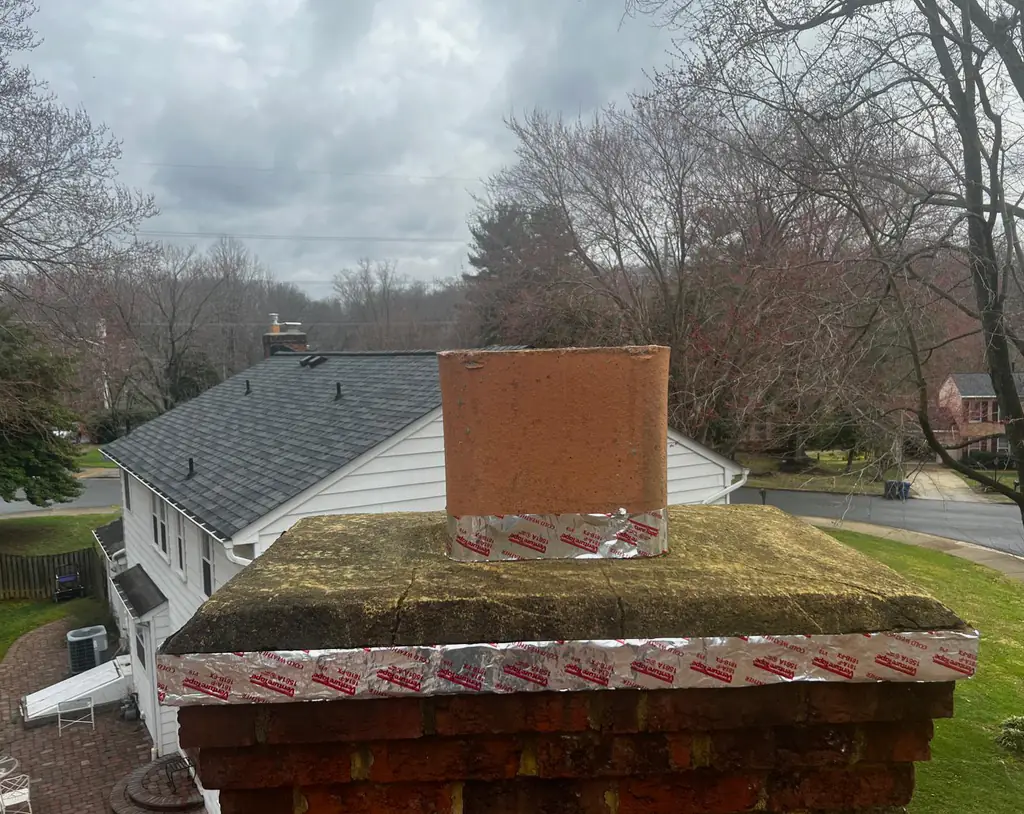
On a masonry chimney, the crown forms the protective surface surrounding the projecting flue tile. Its slope directs rain toward the outside edge, away from the chimney opening. A properly formed overhang and drip edge help keep runoff off the brick below.
The cap sits above the flue opening, leaving space beneath its hood for exhaust to escape. Its hood helps keep rain out of the flue, while a screened design helps exclude animals and debris. A sound cap does not cover or repair cracks across the crown beneath it.
Which Visible Signs Point to Crown Damage or Cap Damage?
- Cracks across the crown — Cracks in the surface surrounding the flue provide paths for water into the chimney top. Ground-level photographs can document visible damage, but they cannot establish its depth.
- Broken crown edges — Missing pieces along the overhang reduce the crown’s ability to shed water beyond the brick face. Loose or falling pieces also make the area below the chimney unsafe.
- Missing or tilted cap hood — An exposed flue opening lacks the cap’s rain protection. A tilted hood or detached mounting needs professional attention because its position affects both attachment and exhaust clearance.
- Damaged or blocked cap screen — Torn screening leaves openings for animals, while accumulated debris restricts the exhaust path. Keep the fireplace off when a blockage is visible.
- Water stains below the chimney — Staining identifies a moisture problem, but it does not identify the entry point. The crown, cap, masonry joints and roof flashing each need consideration.
When Does Your Chimney Need Crown Repair, a Cap, or Both?
Localized crown damage with a sound cap
Repair targets the damaged crown when the remaining material provides a sound base. The cap needs a separate condition check; a crack below it does not establish that the cap needs replacement.
A missing or damaged cap with a sound crown
Cap installation addresses the exposed flue opening. The replacement must match the chimney’s venting arrangement and mounting requirements, rather than simply cover the widest visible area.
A crumbling or poorly shaped crown
Widespread deterioration or a surface that holds water calls for evaluation for crown replacement. A surface coating cannot restore missing material or create a proper overhang.
Damage to both protective parts
The work needs to address both the crown surface and the flue covering. Replacing only the cap leaves crown cracks exposed, while repairing only the crown leaves an uncovered flue open to rain.
Need help now? (771) 209-4584
How Can You Check a Chimney Crown and Cap From the Ground?
- Start with the fireplace off and cool — Do not light a fire to test a suspected chimney defect. Before checking the firebox, confirm that no embers remain and the surfaces are cool.
- Choose a stable viewing position — Use binoculars or your phone’s zoom from level ground. Check that you can observe the chimney without stepping onto a ladder, roof or unstable object.
- Find the crown below the flue — Look for the broad surface around the projecting flue tile. Check for visible missing edges or broken sections, and leave hidden surfaces for a professional inspection.
- Locate the cap above the opening — Look for the raised hood and its supporting sides or screen. Check whether it appears upright, attached and positioned over the flue opening.
- Look for visible screen obstruction — Use binoculars to look for leaves, nesting material or heavy deposits around the screen. If an obstruction is visible, keep the fireplace off and arrange professional removal.
- Follow exterior water marks — Photograph streaks below the chimney top and staining near the roof intersection. Check where each mark begins; a stain near the roof also requires evaluation of the flashing.
- Check the cool firebox with a flashlight — Look for pooled water, damp debris, rust marks or fallen masonry. Check without reaching into the flue or disturbing debris, and stop using the fireplace if pieces have fallen inside.
- Keep dated photographs for the inspection — Save an overall chimney photo alongside close-up images taken with zoom. Check that the pictures show the location of each defect; they document changes but do not establish that the chimney is safe to use.
What Must Crown Repair Address Beyond the Visible Crack?
A crown repair decision starts with the condition of the underlying material. Surface deterioration, deep cracking and loose sections require different work. Covering a crack without checking the surrounding crown leaves the cause and extent of damage unresolved.
The crown’s shape matters as much as its surface condition. Repair planning should address drainage, the outer edge and the joint around the flue tile, where materials move differently as temperatures change. Repair material must suit the application and its required curing conditions.
Our chimney crown repair service addresses damage to this protective top surface. Damage that extends into the flue tile, brickwork or mortar joints requires attention to those parts as well.
Why Must a Chimney Cap Fit the Flue and Preserve Exhaust Clearance?
A cap needs secure attachment and enough open space for exhaust to escape. A hood placed too close to the outlet or a screen clogged with deposits restricts that path. Choosing a cap by appearance alone overlooks the flue dimensions, mounting method and venting requirements.
A cap covering several flues also needs a design suited to that arrangement. The installer must account for the outlets beneath it and use an appropriate attachment method. Do not add household mesh, an improvised lid or a cover that closes the exhaust opening.
After cap work, the inspection should confirm that the attachment is secure and the exhaust openings remain clear. A cap replacement does not resolve cracks in the flue or deterioration in the crown.
Need help now? (771) 209-4584
Does a Framed Chimney Need a Crown or a Chase Cover?
A framed enclosure around a factory-built chimney uses a different top assembly from a masonry chimney. Its broad metal chase cover closes the enclosure around the vent, while the termination cap serves the vent opening. Calling both parts a cap makes repair requests less precise.
Factory-built vent components must follow the requirements for that chimney system. A masonry-style cap or a concrete crown is not an interchangeable replacement. Our guide to what a prefab fireplace is explains the system distinction before you compare repairs.
When Should a Chimney Sweep Inspect Crown or Cap Damage?
Arrange an inspection when you see broken crown material, a displaced cap, blocked screening or water inside the fireplace. Keep the fireplace off when debris blocks the opening or masonry has fallen into the firebox. Stay clear of the ground beneath loose exterior pieces.
A damage check also does not replace regular chimney inspection. The CSIA homeowner resources summarize the NFPA recommendation for annual inspection of chimneys, fireplaces and vents. That inspection addresses the venting system beyond the crown and cap visible outside.
To book a chimney sweep in Washington, call DC Chimney at (771) 209-4584 and request inspection of the crown and cap. We come to your home; inspection establishes whether the work concerns the crown, cap or another chimney component.
Frequently asked questions
Can a larger chimney cap solve a cracked crown?
A larger cap does not repair the cracked material beneath it. Some cap designs shelter more of the chimney top, but the crown still needs evaluation for soundness, drainage and water entry.
Does water in my fireplace prove the chimney crown is cracked?
Water in the fireplace does not identify a single entry point. Rain entering an uncovered flue, crown defects, masonry damage and flashing problems require different repairs. An inspection traces the entry path before repair work is selected.
Can I seal a crown crack myself from the roof?
Keep your checks at ground level and leave roof access to a chimney professional. Crack width alone does not show whether the surrounding crown is sound. Applying a coating over loose material also leaves the damaged base in place.
Does the chimney cap have to come off for crown repair?
The cap’s mounting location and the repair area determine whether removal is necessary. A cap attached across the work area requires a different approach from one mounted directly to the flue tile. After reassembly, its attachment and exhaust clearance need checking.
Arrange a Crown and Cap Inspection
Request an inspection before choosing crown repair, cap replacement or work on both.