
Is It Safe to Use a Fireplace Without a Chimney Sweep?
The answer to “is it safe to use a fireplace without a chimney sweep?” is no when its condition is unknown: keep it unused until inspected. An inspection determines whether sweeping or repairs are needed.
Need help now? (771) 209-4584
Is It Safe to Use a Fireplace Without a Chimney Sweep After Light Use?
Light use does not establish that a fireplace is safe. A chimney can contain nesting material or deteriorated components even when you have burned very little wood. Your decision should follow its inspected condition, rather than the number of fires you remember having.
Annual inspection and automatic annual sweeping are different recommendations. The CSIA homeowner guidance cites NFPA 211’s annual inspection standard, with cleaning and repairs performed as needed. When a current inspection finds no cleaning or repair needs and the system remains unchanged, another sweep is not automatically necessary before every fire.
Dirty Chimney Dangers Include Burning Deposits and Blocked Exhaust
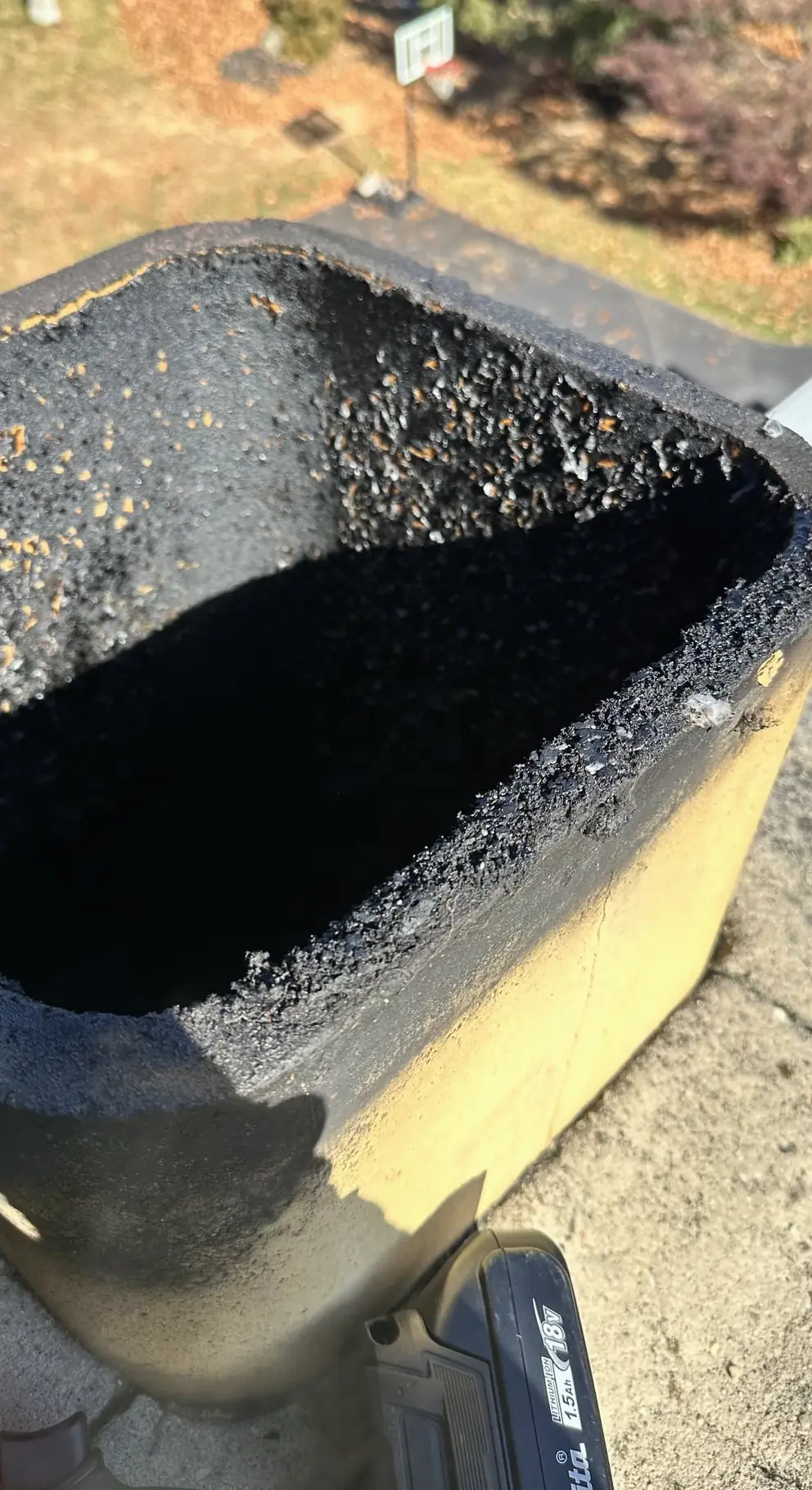
Wood smoke leaves creosote on cooler chimney surfaces as combustion byproducts condense. This residue can appear flaky, sticky or hard and shiny, and it can burn inside the flue. Burning damp wood and restricting combustion air encourage its accumulation.
A blockage creates a different problem: combustion gases lose their intended route outdoors. Nesting material, fallen debris and damaged liner pieces can obstruct that passage. A fireplace that previously worked can develop an obstruction between uses.
Chimney fires can also damage the liner and surrounding structure without producing an obvious outdoor display. A quiet previous burn therefore does not establish that the chimney escaped damage. Suspected fire damage needs evaluation before reuse, rather than a trial fire.
Fireplace Deposits and Fallen Debris Tell You When to Stop
- Hard, shiny black deposits — Glazed creosote needs professional attention even when the layer looks thin. Leave it in place for evaluation; scraping a reachable patch does not establish the condition farther up the flue.
- Twigs, leaves or nesting material — Material falling into the firebox signals a possible obstruction above it. Removing the pieces you can reach does not establish that the remaining exhaust passage is clear.
- Broken clay pieces or masonry fragments — Fragments in the fireplace can indicate deteriorating chimney components. Keep them for the inspection rather than discarding evidence that helps identify where damage occurred.
- A warped or stuck damper — A damper that will not open properly interferes with the exhaust path. Do not force the mechanism or light a fire to see whether heat loosens it.
Need help now? (771) 209-4584
Choose Fireplace Sweeping, Inspection or Repair by the Condition
Inspection for an unknown condition
Choose inspection before using a fireplace with missing maintenance records or an uncertain condition. Inspection evaluates the system; a clean-looking firebox alone cannot establish the condition of its concealed passage.
Sweeping for removable deposits
Choose sweeping when deposits require removal. A complete sweep addresses the flue and smoke chamber above the firebox, rather than stopping at the visible fireplace opening.
Further inspection after a system change
A different appliance, fuel conversion or chimney relining changes the conditions under which the venting system operates. These situations call for a more detailed inspection rather than relying on the previous setup’s maintenance history.
Repair for damaged components
Cracks, failed joints and damaged chimney parts require assessment for repair. Brushing away soot does not restore a broken liner or repair damaged masonry, so cleaning alone does not resolve those findings.
Check an Unused Fireplace Without Lighting a Test Fire
- Keep the fireplace unused — Leave matches, kindling and fire starters aside while you assess its maintenance history. Begin visual checks only when the firebox and its contents are completely cold.
- Find the last inspection record — Read the inspection date and any cleaning or repair recommendations. Check whether the record shows that recommended work was completed; an appointment receipt alone does not answer that question.
- Identify changes since that inspection — Check records for a replacement appliance, fuel change, relining or a damaging event. Flag any change that means the previous inspection no longer describes the current system.
- Illuminate the firebox from the room — Use a flashlight while staying outside the fireplace opening. Look for fallen debris, broken pieces and visible damage; stop the check if reaching farther would require entering the fireplace or dismantling parts.
- Check the damper’s normal movement — Use its regular handle or control only if it moves freely. Check that the plate opens fully, but do not treat an open damper as proof that the entire chimney is clear.
- Record visible deposits — Take a phone photo from a safe position outside the opening. Check whether the image shows where the deposit sits; leave scraping, thickness assessment and removal to the chimney sweep.
- Match the findings to professional service — Use missing records, deposits or damaged pieces to identify the inspection or maintenance task described above. For deposit removal, book our chimney sweep service before another burn.
- Check the findings before restarting — After professional evaluation, review whether cleaning, obstruction removal or repairs remain necessary. Resume use only after the conditions identified as unsafe have been corrected.
A Small Fireplace Fire Cannot Prove the Chimney Is Safe
A small fire still sends heat and combustion gases through the same chimney. Watching smoke rise for a moment does not inspect concealed liner joints or reveal every deposit. Use inspection findings to decide whether to burn, rather than using a fire as the inspection.
Chemical cleaning products also do not replace professional inspection and mechanical sweeping. Likewise, removing ashes from the hearth leaves the smoke chamber and flue untouched. Our guide to chimney sweeping versus chimney cleaning explains why the area being cleaned matters.
Need help now? (771) 209-4584
An Unknown or Changed Fireplace Can Need a Level 2 Inspection
A Level 2 inspection examines more than the readily visible fireplace opening. CSIA’s Level 2 masonry chimney procedure recommends this inspection for property sales, relining, certain appliance changes and events likely to have caused damage. It also applies when a basic inspection cannot establish the venting system’s suitability for use.
The procedure requires video scanning or a similar inspection of the chimney interior. This helps examine liner surfaces and joints that a view from the hearth does not reveal. A recent property purchase or suspected damage therefore calls for an inspection decision before a cleaning-only appointment.
Our chimney inspection service is the relevant starting point when you need the fireplace’s condition evaluated before reuse.
Prepare an Unswept Fireplace for a Home Service Visit
We provide chimney sweeping, inspection and repair at your home. To book with DC Chimney, call (771) 209-4584 with the service you want to schedule. Keep inspection records and appliance instructions together so the visit can account for previous findings and the equipment connected to the chimney.
Leave the fireplace cold and clear access to its opening before the appointment. Sweeping, internal inspection and repair involve different tasks, so confirm the appointment’s scope and expected duration when booking. Keep the fireplace unused afterward if the findings identify work that must be completed before burning.
Frequently asked questions
What happens if you never clean your chimney?
Wood-burning deposits remain in the flue and can accumulate with continued use, creating fuel for a chimney fire. Debris and deteriorating components can also interfere with exhaust flow. Stop using a neglected fireplace until inspection establishes what cleaning or repairs it needs.
How do I know my chimney needs cleaning?
Visible soot, glazed deposits and falling creosote pieces are reasons to arrange professional assessment. CSIA recommends sweeping masonry fireplaces at 1/8 inch of sooty buildup, or sooner when glaze is present; factory-built fireplaces need sweeping when appreciable buildup occurs. Have a sweep assess the deposits rather than reaching into the chimney to measure them yourself.
Can I use a fireplace that has been unused for several years?
Have it inspected before returning it to service. Years without burning do not prevent nesting, obstructions or deterioration. Keep it unused until the inspection identifies its condition and any necessary work is completed.
Can I burn dry wood instead of having a dirty chimney swept?
Dry, seasoned wood helps reduce conditions that encourage creosote formation, but it does not remove existing deposits or repair damage. Changing fuel quality does not make an already dirty chimney ready for use. Address the existing condition first, then follow the appliance’s fuel instructions.
Have an Unknown Fireplace Inspected Before Use
Book chimney inspection or sweeping with DC Chimney at (771) 209-4584, and keep the fireplace cold for the visit.