
Is a Chimney Sweep Worth It?
Yes—chimney sweeps are worth it when your flue needs cleaning; our chimney sweep in Washington, DC starts at $89. We offer same-day service and are open 24 hours a day, 7 days a week.
Need help now? (771) 209-4584
Are Chimney Sweeps Worth It When Your Fireplace Still Works?
A fireplace that lights and draws smoke upward can still have deposits inside its flue. Sweeping earns its value by removing accumulated soot and creosote from the exhaust passage. A successful fire does not tell you how clean that passage is or whether its lining has damage.
The useful decision is whether your chimney needs cleaning, inspection, repair, or a combination. Paying for sweeping makes sense when removable deposits are present. Paying for cleaning alone leaves a different problem unresolved when the real issue is a damaged liner, faulty damper, or water entry.
Choose Sweeping, Inspection, or Repair Based on the Chimney’s Condition
Inspection and sweeping serve different purposes: one evaluates condition, while the other removes deposits. The CSIA homeowner guidance cites the NFPA 211 recommendation for annual chimney inspection and identifies 1/8 inch of sooty buildup as a sweeping trigger.
Sweeping for accumulated deposits
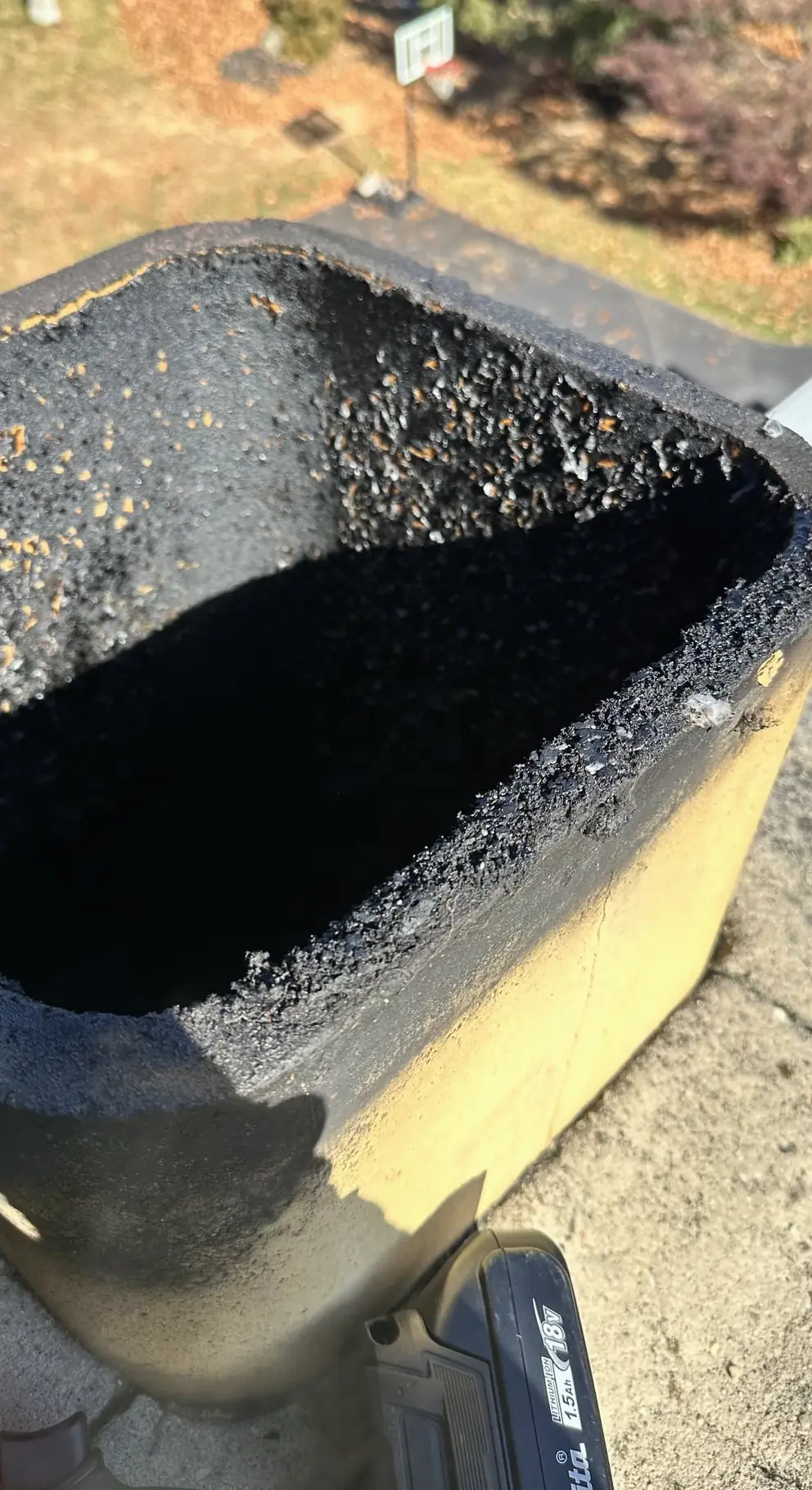
Sweeping addresses soot and creosote on accessible interior surfaces. The deposit’s texture matters: loose material and hard, glazed buildup require different removal methods. Have the technician identify the deposit before treating ordinary brushing as the complete solution.
Inspection for an unclear condition
Inspection evaluates the chimney rather than assuming dirt is the only concern. This is the useful starting point when you lack maintenance records or see damage. Ask which areas the inspection covers and whether the flue needs a camera examination.
Repair for damaged chimney parts
Cracked lining, damaged masonry, and defective dampers require attention beyond deposit removal. We offer chimney liner repair, chimney masonry repair, and chimney damper repair. Cleaning does not restore a broken component, so repair findings need their own scope of work.
Eight Checks to Make Before Booking a Chimney Sweep
Use these checks to gather visible evidence without dismantling the fireplace or entering the chimney. Keep your inspection at floor level and outdoors at ground level; leave roof access, deposit measurement, and internal testing to a chimney professional.
- Start with a completely cold fireplace — Check only after the fire is out and the fireplace and ashes are cold. Leave ash and deposits undisturbed during this assessment. Before moving closer, check that no embers remain and that you can inspect without touching hot parts.
- Find the last service record — Look for the previous inspection report, cleaning receipt, or repair paperwork. Check whether it documents actual sweeping, an inspection, or both. Note any unresolved recommendations so an old receipt does not become your only reason to use the fireplace.
- Look inside with a flashlight — From outside the firebox opening, shine a flashlight onto visible surfaces. Check for loose soot, shiny dark deposits, fallen material, or visible gaps. A clean-looking firebox does not reveal the condition of the full flue above it.
- Check the damper’s normal control — With the fireplace cold, operate the existing damper handle only if it moves normally and is safely accessible. Check whether the visible plate responds to the control. Stop if it binds, and leave disassembly or forceful adjustment to the technician.
- Photograph visible damage — Use your phone camera to record cracked firebrick, fallen fragments, dark staining, or water marks without reaching into the chimney. Check that each photograph shows the location as well as the detail. These images preserve evidence that loose material or changing light can obscure.
- View the chimney from the ground — Use binoculars from a safe standing position to look for an obviously displaced cap or damaged masonry. Check only what you can see clearly. Keep ladders out of this assessment; a ground-level view cannot establish the condition of hidden joints or the chimney interior.
- Record symptoms from previous use — Write down whether smoke entered the room, debris fell into the firebox, or the damper failed to move. Check your notes against what actually happened, without lighting a test fire. Repeated smoke entry needs evaluation before another fire.
- Match the booking to the evidence — Book sweeping for deposit removal and inspection for condition assessment; visible damage also needs repair evaluation. Check that the booking identifies the work included and its expected duration. Keep the fireplace unused when blockage, damage, or smoke entry remains unresolved.
Need help now? (771) 209-4584
Signs a Chimney Sweep Needs to Address More Than Soot
Some findings change the next step from routine cleaning to a closer examination. Stop using the affected fireplace until the cause is assessed when you find an obstruction, damaged parts, or smoke entering the room.
- Hard, shiny deposits — A glossy coating calls for evaluation of the deposit and its removal method. Do not scrape it yourself or light a hotter fire to burn it away; that adds heat to combustible material inside the chimney.
- Brick, mortar, or liner fragments — Fallen pieces raise a condition question that brushing cannot answer. Keep photographs and leave the fragments available for the technician to examine before they are discarded.
- Smoke entering the room — Deposits or an obstruction can restrict exhaust, but damper and venting problems also need assessment. Do not keep lighting fires to see whether the problem clears.
- Nesting material or animal activity — An occupied or obstructed chimney needs assessment before sweeping or fireplace use. We offer chimney animal removal; avoid reaching into the opening or trying to force material through the flue.
A Chimney Sweep Does Not Replace a Detailed Flue Inspection
Removing deposits and examining concealed surfaces are separate tasks. Ask whether the proposed work includes a visual inspection, a video scan, or cleaning alone. A clean passage can still contain damaged lining, and a cleaning receipt alone does not establish the condition of every chimney component.
A property sale, appliance change, relining, or a fire or weather event can call for a Level 2 inspection. The CSIA Level 2 masonry chimney procedure describes those triggers and requires a video scan. Bring those circumstances into the booking instead of treating a basic sweep as the entire assessment.
Judge a Chimney Sweep by the Work Included
Before approving work, identify the fireplace or appliance being serviced, the passage being cleaned, and the treatment proposed for the deposits found. Ask how removed material will be contained and collected. Clarify whether an inspection, camera examination, obstruction removal, or specialized creosote treatment is included or separately priced.
The visit length depends on access, deposit condition, obstructions, and the inspection work included. Ask for the expected on-site duration for that scope when booking, and keep the fireplace accessible until the work is complete. Our guide to how long a chimney sweep takes covers the scheduling question in more detail.
Need help now? (771) 209-4584
After Sweeping, Check What Was Removed and What Remains
Ask for the cleaning findings: which passage was serviced, what deposits were removed, and whether any material or obstruction remains. Review photographs or inspection findings when provided. Separate completed cleaning from recommendations that still need inspection or repair.
Before using the fireplace again, establish whether any unresolved finding requires it to stay out of use. Do not use a test fire to investigate a suspected blockage or damaged flue. Keep the service record with earlier reports so the next assessment starts with a clear maintenance history.
Book Chimney Sweeping in Washington, DC for Deposit Removal
We come to homes throughout Washington, DC from our Connecticut Avenue NW base. Our chimney sweep service addresses deposit removal; inspection and repair address condition findings that cleaning alone does not resolve.
To book, contact us or call (771) 209-4584 with your service address and the fireplace or appliance to be serviced. Include any existing inspection recommendations in the booking, and confirm the cleaning scope and expected visit length before work begins.
Frequently asked questions
What should a chimney sweep cost in Washington, DC?
Our chimney sweep starts at $89 in Washington, DC. Check whether the proposed work includes cleaning alone or additional inspection, obstruction removal, or specialized deposit treatment. Compare the actual scope before treating two service prices as equivalent.
How many times should I get my chimney cleaned?
Have the chimney inspected annually, then base cleaning on the deposits and conditions found. Burning frequency alone does not measure buildup inside the flue. Keep the inspection findings so you know whether sweeping is due or another issue needs attention.
Will a chimney sweep fix smoke coming into my living room?
Sweeping addresses deposits that restrict the passage, but smoke entry also requires checking for obstructions, damper problems, and other venting defects. Stop using the fireplace until the cause is assessed. A cleaning appointment should not leave a recurring smoke problem unresolved.
Is sweeping worth paying for if an inspection finds no buildup?
Pay for cleaning when the findings support deposit removal. If inspection finds no cleaning need, follow the documented maintenance or repair recommendations instead. Ask the technician to distinguish what needs attention now from what should be checked at the next inspection.
Book the Work Your Chimney Needs
Contact DC Chimney to book sweeping, inspection, or repair and confirm the scope before work begins.