
What Is the Average Cost to Repair a Chimney?
Our Washington, DC starting prices—$250 for cap installation and $899 for liner installation—help answer: what is the average cost to repair a chimney? Same-day service is available, and we’re open 24/7.
Our Starting Prices in Washington
| Service | Price |
|---|---|
| Chimney Sweep | from $89 |
| Chimney Inspection | from $39 |
| Chimney Cleaning | from $89 |
| Chimney Cap Installation | from $250 |
| Chimney Liner Installation | from $899 |
| Gas Fireplace Service | from $49 |
Need help now? (771) 209-4584
What Is the Average Cost to Repair a Chimney Based On?
The damaged component determines which starting price applies. A cap covers the flue opening, a liner forms the passage inside the chimney, and masonry repairs address the bricks and mortar around it. These jobs solve different problems, so their prices are not interchangeable.
A starting price applies to a particular service; it is not a US market average or a total for every damaged chimney. Compare estimates by the work they include: the component, extent of damage, materials, access, and removal of damaged material. A lower total tells you little when one estimate covers a cap and another includes masonry work.
Our chimney repair service covers work such as crown repair, flashing repair, tuckpointing, liner repair, and rebuilding. Match the proposed work to the damaged part before comparing totals.
Which Chimney Damage Should Your Repair Estimate Address?
- A missing or damaged cap — The cap sits above the flue opening. From the ground, look for a visibly displaced cover or damaged mesh; a professional inspection should determine whether the attachment and surrounding chimney top also need attention.
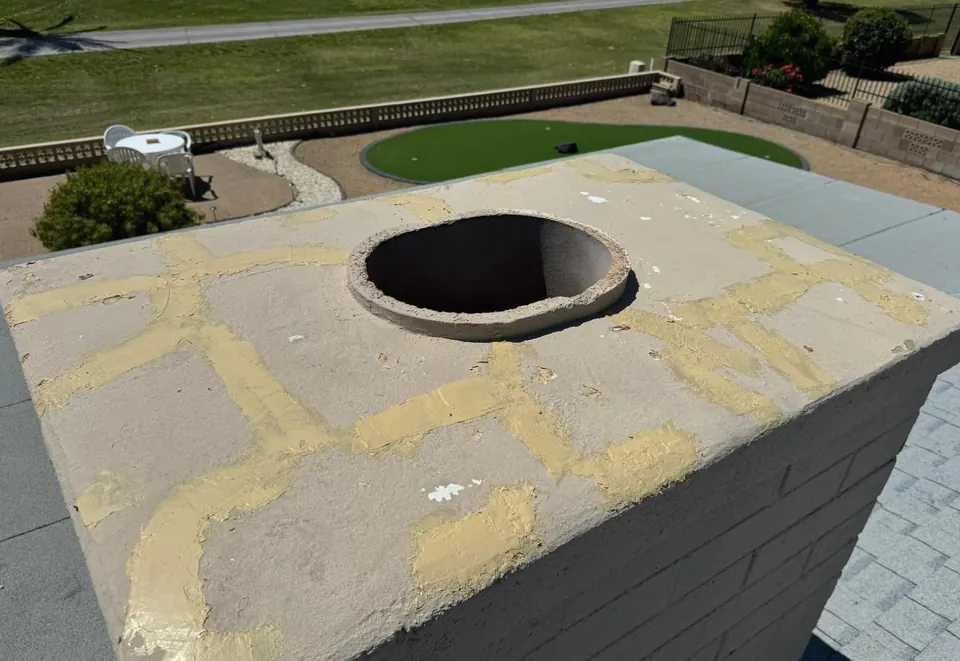
- Cracks in the chimney crown — The crown is the sloped masonry surface at the top of a masonry chimney, separate from the cap. An estimate should distinguish repairing that surface from replacing the cover above the flue.
- Missing mortar or damaged bricks — Open mortar joints and broken brick faces call for different repair scopes. The estimate should identify whether the work addresses joints, individual bricks, or a larger unstable section.
- Water marks around the chimney — A ceiling stain shows where water becomes visible, not necessarily where it enters. The inspection should consider the crown, masonry, and flashing—the metal connection between the chimney and roof—before selecting a repair.
- Fragments inside the fireplace — Pieces found in the firebox can come from different parts of the system. Leave them in place for inspection, photograph them, and stop using the fireplace until their source and the condition of the venting passage have been checked.
When Does a Chimney Need Repair, Replacement, or Rebuilding?
Cap installation versus crown repair
Choose the scope that addresses the actual failed component. Replacing a cap does not repair a cracked crown, and repairing the crown does not replace missing cap mesh or a damaged cover.
Tuckpointing versus brick replacement
Tuckpointing addresses deteriorated mortar joints. Damaged bricks require their own assessment; renewing the joints alone leaves broken brick faces in place.
Liner repair versus liner installation
The decision rests on the liner’s material, condition, and suitability for the connected appliance. Ask for findings from inside the flue, rather than approving a liner job solely because exterior masonry looks worn.
Localized masonry repair versus rebuilding
A limited repair addresses a defined damaged area. Rebuilding addresses a larger section that needs reconstruction; the estimate should identify its boundaries and explain why retaining that section is unsuitable.
Sweeping versus repairing damage
Sweeping removes deposits and accessible debris from the venting system. It does not replace missing mortar, repair flashing, or restore a damaged liner, so cleaning and structural repairs should appear as separate tasks.
Need help now? (771) 209-4584
Which Starting Price Fits These Three Chimney Situations?
A damaged cap with an otherwise intact chimney top: our chimney cap installation starting price is $250. Before approving that scope, establish whether the crown and cap attachment area also need repairs; replacing the cover alone does not address damage beneath it.
A flue that needs a new liner: our chimney liner installation starting price is $899. The CSIA Level 2 inspection procedure identifies relining as a reason for a Level 2 inspection and requires a video scan as part of that inspection.
A water stain without an established entry point: our chimney inspection starting price is $39. Establish the source before approving flashing work, crown repair, or waterproofing; these address different pathways for water. You can compare the named services on our prices page.
Eight Safe Steps to Build a Useful Chimney Repair Estimate
- Let the fireplace cool completely — Begin only when the fireplace and ashes are cold. Check that no embers remain before approaching the firebox, and keep the appliance off while documenting damage.
- Photograph the whole chimney from the ground — Use your phone’s zoom or binoculars from a stable position. Check that the photographs show the chimney top and roof connection; leave roof access and close inspection to the professional.
- Record individual visible defects — Take separate photographs of stains, open joints, damaged bricks, or fallen fragments. Check that each close view has a wider photograph showing its location.
- Look into the cold firebox from the opening — Use a flashlight without reaching into the flue or removing parts. Note visible cracks, loose material, and water marks; check that your photographs capture the affected surface.
- Write down when the symptom appears — Record whether water appears during rain or whether smoke entered the room during previous use. Check the dates against your photographs; do not light another fire to recreate a problem.
- Request a written scope for each damaged part — Look for the component name, repair method, materials, and extent of work. Check whether cleaning, removal, and disposal appear separately or are included in the stated scope.
- Compare matching tasks across estimates — Place the estimates side by side and match cap work to cap work, masonry to masonry, and liner work to liner work. Check every difference in scope before treating a difference in totals as a saving.
- Establish the completion and reuse checks — Ask what photographs, inspection findings, and operating instructions accompany the finished repair. Check whether mortar or other materials need setting time before using the fireplace again.
What Should a Chimney Repair Estimate Include Beyond Materials?
An estimate should define access, preparation, repair work, cleanup, and any inspection needed to evaluate the result. Ask whether the proposed total includes removing the failed component and handling the resulting debris. These details let you compare complete jobs rather than isolated material costs.
The schedule should distinguish the inspection visit, repair work, and any required material setting time. Ask for the expected visit length for the specific scope and whether another visit is needed. A cap installation and a masonry rebuild involve different tasks, so one visit-length estimate should not stand in for the other.
Our chimney work carries a warranty starting from 2 years. Before approving the repair, request the written terms for that work, including covered components and the process for reporting a problem.
Need help now? (771) 209-4584
Why Can a Chimney Still Leak or Smoke After a Repair?
A repair can address one damaged part while leaving another problem unresolved. For example, replacing flashing does not repair cracks at the chimney top. Ask how the inspection findings connect the proposed repair to the symptom you have seen.
Waterproofing also serves a different purpose from reconstructing damaged masonry. Before approving a surface treatment, establish whether open joints, broken bricks, or other defects need physical repair. The scope should identify those repairs rather than group everything under a vague description such as “seal chimney.”
Smoke entering the room requires assessment of the fireplace and venting system; a new cap alone does not establish that the system is ready for use. Stop using the fireplace if smoke returns, and arrange an inspection instead of repeatedly lighting fires to test it.
What Should You Settle Before Booking Chimney Repair?
Approve a scope that identifies the damaged part, repair method, included tasks, and completion checks. Settle how additional damage discovered during work will be documented and approved before extra work begins. Keep the estimate and photographs together so you can compare the finished result with the agreed scope.
For work that can be scheduled around fireplace use, our guide to the best time of year for chimney repair addresses timing separately. Crumbling material, recurring leaks, or smoke entering the room call for assessment before further fireplace use.
To book with DC Chimney, call (771) 209-4584 and provide your home address, the appliance type, and access arrangements. Keep existing inspection reports available so the visit can account for previously documented damage.
Frequently asked questions
Can chimney cleaning fix a leak?
Cleaning removes deposits and debris; it does not repair flashing, cracked masonry, or a damaged crown. A leak needs an inspection that traces the water entry point. Approve the repair that addresses that finding rather than treating cleaning as a substitute.
Should I approve a new chimney liner because the outside bricks look worn?
Exterior brick damage alone does not establish the condition of the liner inside the chimney. Ask for interior inspection findings and an explanation of the liner’s suitability for the connected appliance. Keep exterior masonry repairs and liner work separate in the estimate.
Can I keep using my fireplace while waiting for chimney repair?
Keep it off when there is smoke entering the room, falling material, or suspected damage to the venting passage. Arrange an inspection before further use. After repair, follow the instructions for any material setting time and checks required before reuse.
What should I receive after chimney repair is finished?
Request an invoice identifying the completed work, photographs of areas you cannot safely view, and any inspection findings related to the repair. Keep the written warranty terms with those records. Ask for specific instructions about fireplace reuse and follow-up maintenance.
Book a Chimney Repair Assessment
Call (771) 209-4584 with your home address and any existing chimney inspection report.