
What Does a Chimney Sweep Do During a Visit?
The answer to “what does a chimney sweep do?” is remove soot and creosote and check accessible parts, starting at $89 in Washington, DC. We offer same-day service and are open 24/7.
Need help now? (771) 209-4584
What Does a Chimney Sweep Do Beyond Removing Fireplace Ash?
A chimney sweep addresses deposits inside the venting passage, where a fireplace shovel cannot reach. Emptying the firebox removes leftover ash; sweeping removes soot and creosote from the route that carries combustion gases outside.
What does a chimney sweep include? A typical visit involves protecting the work area, accessing the chimney passage, brushing suitable deposits loose, collecting debris and checking accessible components. A full interior camera scan is a separate inspection task, so establish the scope before work begins.
The CSIA homeowner resources explain the annual inspection recommendation and the guidance to sweep an open masonry fireplace when soot reaches 1/8 inch. Glazed deposits require attention even when the coating looks thin; thickness alone does not determine the cleaning method.
Does Your Chimney Need Sweeping, Inspection or Specialized Removal?
Choose the visit according to the chimney’s condition and any recent changes. The CSIA Level 2 inspection procedure describes circumstances requiring a closer examination, including appliance changes, property transfers and events that could damage the chimney; this inspection includes an interior video scan.
Routine chimney sweeping
Sweeping addresses removable soot and creosote in the flue. It fits a chimney with ordinary deposits, while any damage discovered during the visit requires its own assessment.
Chimney inspection
An inspection evaluates chimney condition and venting concerns. Arrange an inspection when you need to assess an unfamiliar fireplace or investigate a problem that brushing cannot resolve.
Video inspection
A camera examines interior surfaces beyond a direct view through the fireplace opening. It helps assess liner joints and other concealed areas when the inspection scope calls for it.
Specialized creosote removal
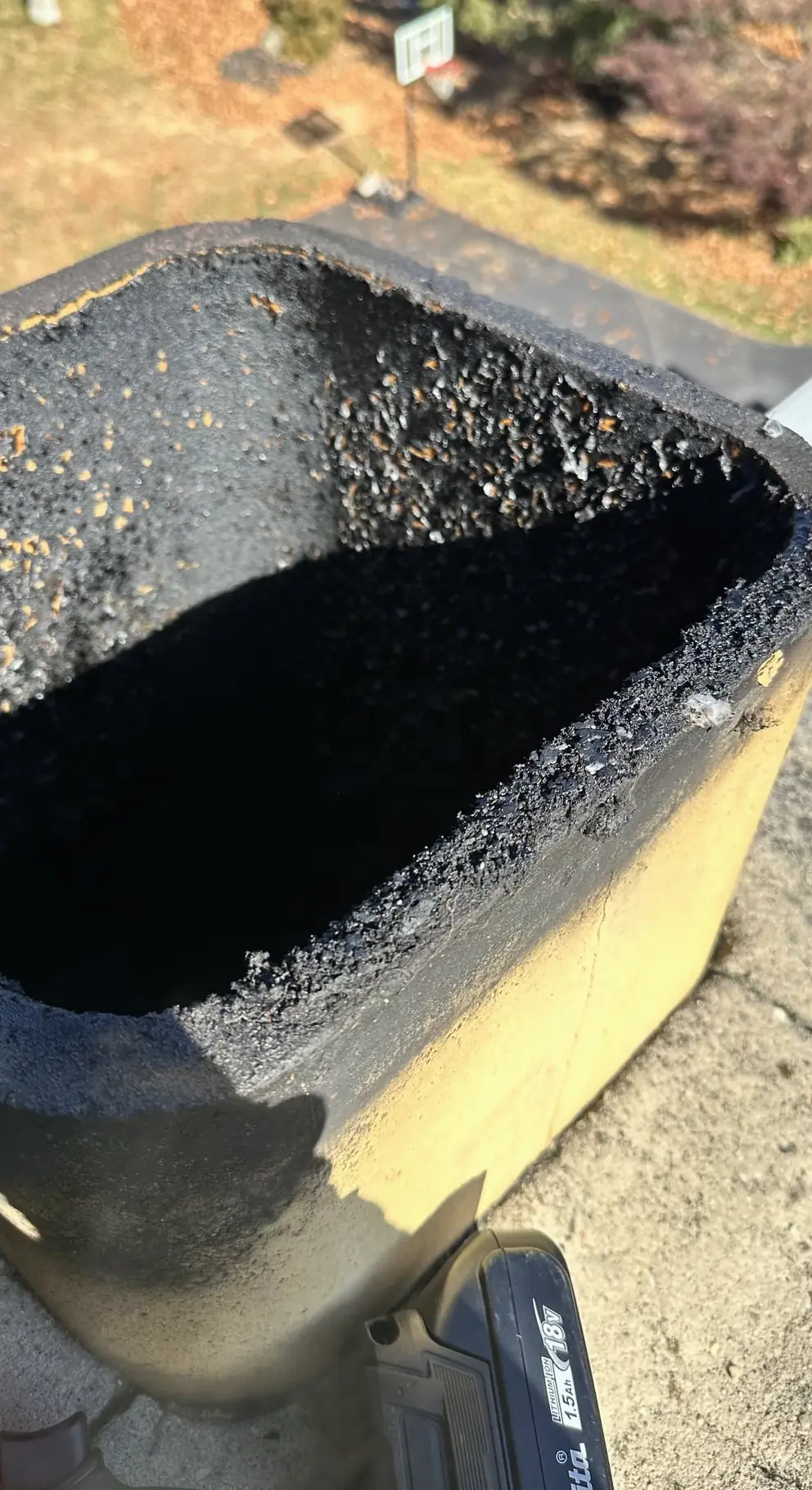
Hard, shiny deposits can resist ordinary brushing. They require assessment before a removal method is selected; repeatedly brushing the same surface does not establish that the passage is clean.
What Happens During a Chimney Sweep Visit, Step by Step?
The access route and cleaning method vary with the fireplace and chimney construction. These are the main stages of a typical sweeping visit, with checks that determine whether the next stage can proceed.
- Identify the appliance and its flue — The sweep identifies which fireplace or stove connects to the passage being serviced. The first check is that the cleaning scope matches that appliance, especially where a home has multiple flues.
- Protect the fireplace work area — Floor coverings and a suitable collection setup contain falling debris around the opening. Before brushing begins, the sweep checks that the protection covers the working area and leaves access to the fireplace.
- Examine the firebox and damper — A light helps reveal visible damage, accumulated debris and the damper’s position. The sweep checks whether these accessible parts allow cleaning access or need attention before tools enter the passage.
- Assess the deposits — The sweep distinguishes loose soot from harder creosote and checks for an apparent obstruction. That assessment determines whether ordinary sweeping is suitable or additional removal work is needed.
- Brush the accessible chimney passage — A brush and extension rods reach through the selected access point to loosen deposits. Tool selection must suit the liner material; the sweep checks the progress of removal rather than relying on a fixed number of passes.
- Collect loosened soot and debris — Fallen material is removed from accessible collection areas using suitable soot-handling equipment. The check includes places where loosened debris can settle, such as the smoke shelf behind a fireplace damper.
- Recheck the cleaned areas — The sweep examines accessible surfaces for remaining deposits and newly exposed defects. A cleaner passage can reveal cracks or deterioration that were harder to see beneath soot.
- Identify the next action — The final review separates completed cleaning from unresolved concerns. Before using the fireplace, check whether any finding requires repair, additional removal or a more detailed inspection.
Need help now? (771) 209-4584
How Should You Prepare Your Fireplace for a Sweep Visit?
Preparation gives the sweep access to the appliance and keeps household items outside the work area. Leave chimney access, internal disassembly and deposit removal to the person performing the service.
- Leave the fireplace unused and cold — Do not light a fire before the appointment. Tell the sweep if the appliance still contains heat or hot embers so work does not begin around an active heat source.
- Clear the route to the hearth — Move furniture, baskets, decorations and loose rugs away from the fireplace opening. Keep a clear path for tools and debris collection equipment.
- Keep appliance information accessible — Have the fireplace or stove manual and previous inspection paperwork available if you have them. These can identify the appliance and show whether an earlier defect still needs attention.
- Keep children and pets outside the work area — Brush rods, coverings and collection equipment occupy space around the hearth. Arrange a separate area before the sweep starts so the working path stays clear.
Which Chimney Problems Will Sweeping Leave Unresolved?
Cleaning removes deposits; it does not rebuild damaged components or correct every venting problem. These findings change what needs to happen before the fireplace returns to use.
- Cracked or deteriorated liner surfaces — Brushing cannot close a crack or restore a damaged liner joint. Arrange an assessment of the defect rather than treating a clean surface as proof that the liner is sound.
- A damper that sticks or fails to open — Deposits can interfere with movement, but a damaged mechanism requires separate repair. Do not force the control or light a fire to test whether smoke will pass.
- Water stains or wet masonry — Sweeping does not seal a leaking crown, flashing joint or other water entry point. The source of moisture needs investigation before a repair method is selected.
- Smoke entering the room — Deposit removal does not establish why smoke spills indoors. Stop using the fireplace and arrange a chimney inspection to investigate the venting problem.
What Should You Check Before Using a Swept Fireplace?
Review which appliance and flue were cleaned, whether deposits remain and whether any components need further attention. Ask whether the visit included only accessible visual checks or a more detailed inspection; those scopes answer different questions.
Separate a cleaning result from a repair recommendation. A remaining obstruction, damaged liner or unresolved smoke problem needs a specific next step before another fire, even when the firebox looks tidy.
Keep the service findings with your fireplace records. Photographs or written descriptions, when provided, make it easier to identify the same location during later inspection or repair work.
Need help now? (771) 209-4584
What Determines the Length of a Chimney Sweep Visit?
The amount and type of buildup, the number of flues and the available access determine the work involved. A visit with ordinary removable soot has a different scope from one that uncovers hardened deposits or requires a camera examination.
When booking, request an expected appointment length for the agreed scope and identify how many fireplaces or stoves need service. Keep time available for the findings review, since cleaning can expose a condition that needs a separate decision.
How Do You Book a Chimney Sweep at Your Washington, DC Home?
We travel to homes throughout Washington, DC from our Connecticut Avenue NW base. Our chimney sweep service covers the cleaning task described here; inspection, creosote removal and chimney repair address additional needs.
To book, call (771) 209-4584 or contact us with the service address, appliance type and number of flues you want serviced. Request the appointment scope and expected visit length before scheduling so you know which work the appointment covers.
Frequently asked questions
Do chimney sweeps make a mess?
Sweeping loosens soot and creosote, so protecting the hearth and collecting debris are important parts of the process. Clear nearby furnishings before the visit and ask how the work area will be covered. Afterward, check the hearth and surrounding floor before putting belongings back.
Does a chimney sweep check the entire inside of the chimney?
A visual check from accessible openings does not show every interior surface or liner joint. A video inspection uses a camera to examine areas beyond that direct view. Confirm whether a camera scan is included in your appointment or needs a separate inspection.
Can I use my fireplace immediately after it is swept?
Review the findings before lighting another fire. Remaining deposits, an obstruction or damaged components can require further work after sweeping. Ask whether any identified condition needs attention before use.
Will one chimney sweep appointment cover every fireplace in my home?
The appointment scope needs to identify each appliance and flue being serviced. Cleaning one passage does not clean a separate passage connected to another fireplace or stove. Include all appliances you want serviced when booking so the visit accounts for each one.
Book Your Chimney Sweep Visit
Call (771) 209-4584 with your service address, appliance type and number of flues.